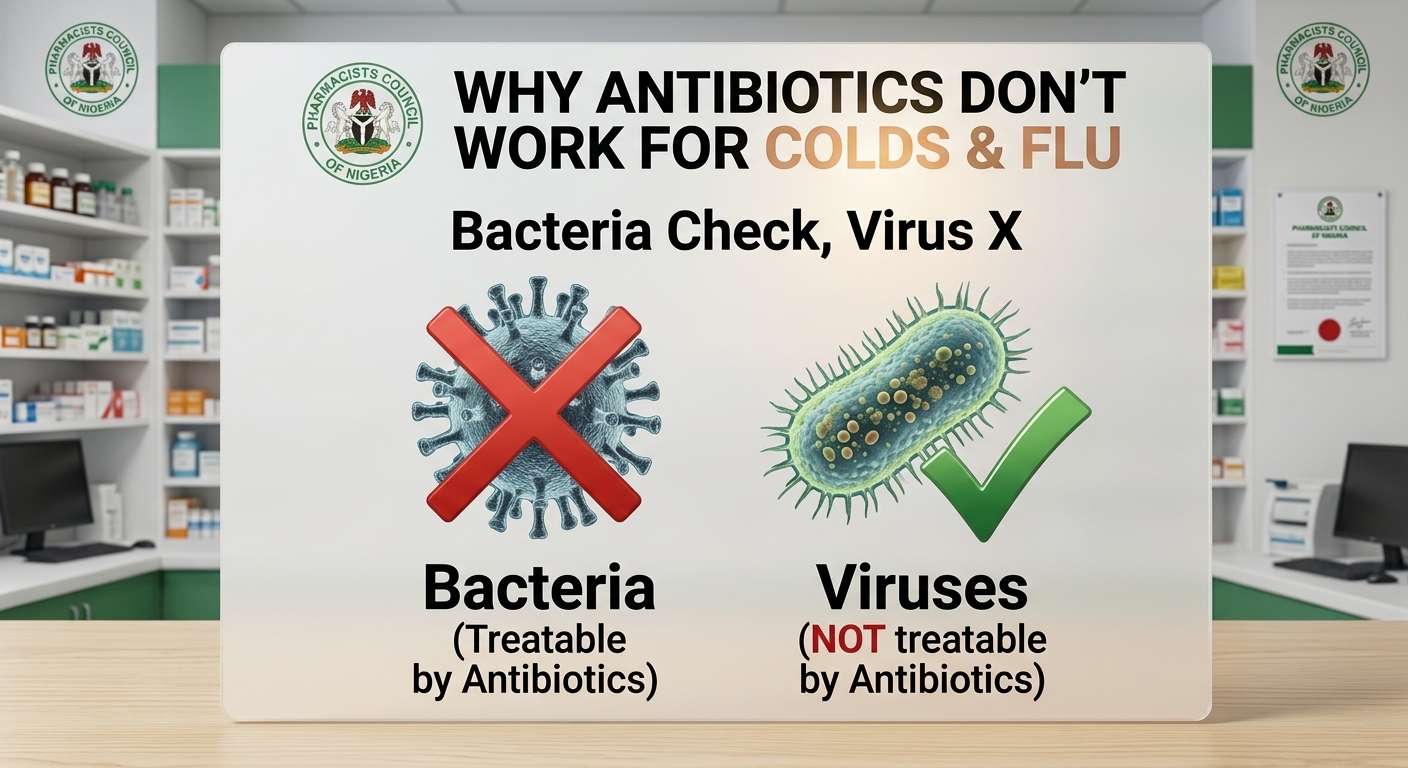
Colds and flu are caused by viruses, not bacteria. Discover why antibiotics won't help — and how their misuse puts you and others at risk.
If you've ever asked a doctor for antibiotics to treat a bad cold or the flu, you may have been told they won't help. This isn't about withholding treatment; it is about using the right medicine for the right germ.
Colds and the flu are caused by viruses, while antibiotics only work against bacteria. Taking antibiotics for viral infections won't make you feel better faster and can actually cause harm.
What Are Colds and Flu, and What Causes Them?
The common cold and influenza (flu) are both respiratory illnesses, but they are caused by different viruses. More than 200 viruses can cause cold-like symptoms, with rhinoviruses being the most common in many countries.
Influenza is caused specifically by influenza viruses (types A, B, and sometimes C), which tend to produce more severe symptoms than typical colds.
Because these illnesses are viral, they behave differently from bacterial infections such as strep throat or bacterial pneumonia. Viruses invade living cells and use the cell's machinery to replicate, whereas bacteria are independent living organisms that can be targeted by antibiotics.
Why Antibiotics Don't Work Against Viruses
Antibiotics are designed to attack structures or processes that exist in bacteria but not in viruses. For example, many antibiotics interfere with bacterial cell wall formation or protein synthesis, features that viruses simply do not have.
This fundamental biological difference means that antibiotics cannot kill viruses or stop them from multiplying. Taking an antibiotic for a cold or flu will not:
Frequently Asked Questions
Here are answers to some common questions about this topic.
Do antibiotics treat colds or the flu?
No. Colds and flu are caused by viruses, while antibiotics work only against bacteria. Antibiotics will not cure these illnesses or help you recover faster.
Why shouldn't I take antibiotics unnecessarily?
Unnecessary antibiotic use can cause side effects, including allergic reactions and severe diarrhoea, and contributes to antibiotic resistance.
What can help relieve cold or flu symptoms?
Rest, sleep, drink plenty of fluids, use saline nasal spray or a humidifier, and try throat lozenges. Honey may help relieve cough in adults and children aged 1 year or older.
Are there medicines for influenza?
Antiviral medicines, such as oseltamivir, may help some people with influenza, especially those at higher risk of complications. They work best when started within 1–2 days of symptom onset.
Disclaimer: This article is for informational purposes only. Always consult a qualified healthcare professional for medical advice and visit nafdac.gov.ng for official NAFDAC information.
Even thick, yellow, or green mucus, often mistaken as a sign of bacterial infection, is common in viral colds and does not mean antibiotics are needed.
The Risks of Unnecessary Antibiotic Use
Using antibiotics when they aren't needed isn't harmless. Every unnecessary dose increases your personal risk of side effects and contributes to a larger global problem: antibiotic resistance.
Personal risks
Antibiotics can cause side effects ranging from mild rashes and stomach upset to serious allergic reactions and severe diarrhoea caused by Clostridioides difficile (C. diff) infection. These risks occur even when the antibiotic provides no benefit.
Global threat: antimicrobial resistance
When bacteria are repeatedly exposed to antibiotics, some survive and become resistant. These drug-resistant bacteria can cause infections that are harder, sometimes impossible, to treat. WHO estimates that bacterial antimicrobial resistance was associated with about 4.7 million deaths globally in 2021.
In 2023, about one in six laboratory-confirmed bacterial infections worldwide were resistant to at least one common antibiotic, and resistance has been rising across many pathogen–drug combinations. WHO's 2025 surveillance report on the misuse of antibiotics for viral infections like colds and flu is a major driver of this trend.
What Actually Helps When You Have a Cold or Flu?
Because colds and most cases of flu are viral, treatment focuses on relieving symptoms while your immune system clears the infection.
For the common cold
There is no cure for the common cold, but most people recover within 7–10 days. Helpful measures include the following:
Rest and adequate sleep
Drinking plenty of fluids (water, broth, herbal tea)
Using a clean humidifier or cool-mist vapouriser
Saline nasal sprays or drops
Throat lozenges or cough drops
Honey for cough relief in adults and children aged 1 year and older
Over-the-counter pain relievers and decongestants can ease discomfort, but they do not shorten the illness.
For influenza
Flu symptoms are often more intense and may include high fever, body aches, fatigue, and cough. In addition to rest and fluids, antiviral medicines (such as oseltamivir) can be prescribed for some people, especially those at higher risk of complications. These work best when started within 1–2 days of symptom onset and can shorten illness by about a day.
Antivirals are not antibiotics; they specifically target influenza viruses.
When Might Antibiotics Be Needed?
Most colds and flu cases remain viral and do not require antibiotics. However, a viral infection can sometimes lead to a secondary bacterial infection, such as:
Bacterial pneumonia
Bacterial sinusitis lasting more than 10 days or worsening after initial improvement
Certain ear infections
Strep throat (a bacterial sore throat)
In these situations, a healthcare professional may prescribe antibiotics after evaluating your symptoms and sometimes ordering tests.
When Should You Seek Professional Help?
Contact a healthcare provider if you experience any of the following:
Fever lasting more than three days or returning after initial improvement
Symptoms that worsen after a week or do not improve after 10 days
Severe sore throat with difficulty swallowing
Shortness of breath, chest pain, or persistent high fever
Confusion, severe headache, or persistent vomiting
For infants, older adults, pregnant people, and those with chronic conditions, earlier medical advice is often recommended.
Conclusion
Antibiotics are life-saving medicines for bacterial infections, but they have no effect on the viruses that cause colds and flu. Using them unnecessarily exposes you to side effects and fuels the global crisis of antibiotic resistance. The best approach is supportive care for viral illnesses, appropriate use of antivirals for flu when indicated, and reserving antibiotics for confirmed or strongly suspected bacterial infections under medical guidance.
When might antibiotics be needed?
Antibiotics may be prescribed when a healthcare professional diagnoses a secondary bacterial infection, such as bacterial pneumonia, bacterial sinusitis, certain ear infections, or strep throat.
Disclaimer: VerifyProduct.ng organizes publicly available information for educational purposes only and does not replace official verification through NAFDAC or any regulatory authority. This platform is not affiliated with NAFDAC or any government agency.