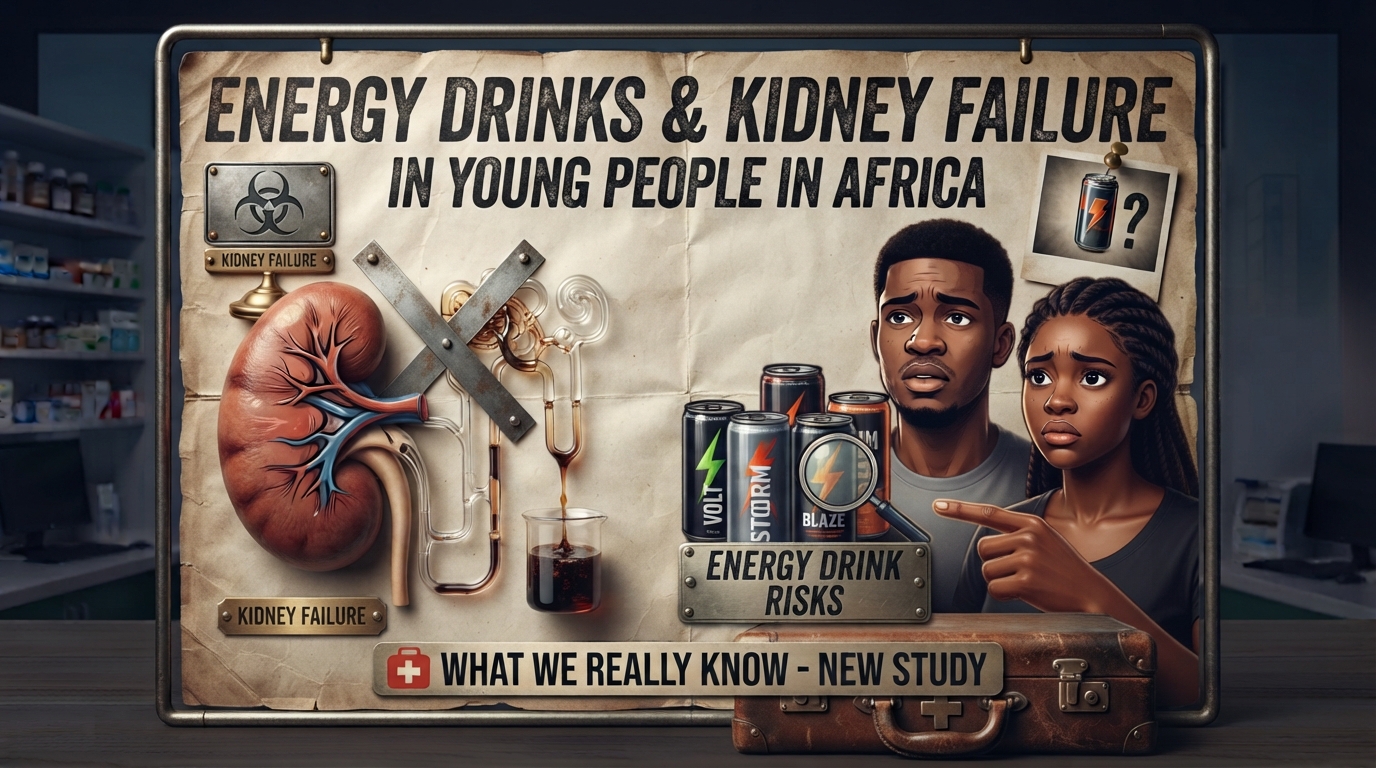
Energy Drinks and Kidney Failure in Young People in Africa: What We Know
7 October 20265 min readHealth
Energy drinks may harm the kidneys when consumed heavily or with dehydration, alcohol or medicines. Learn what is known about young people, dialysis and kidney failure in Africa.
Energy drinks are widely advertised as a quick way to feel more awake, study longer, work harder, or improve sports performance. Many young people drink them during exams, night shifts, parties, long journeys, and physical activity.
At the same time, kidney disease and dialysis are affecting many people across Africa, including young adults. This has led to an important question: Can energy drinks cause kidney failure, and are they responsible for the growing number of young people receiving dialysis?
The careful answer is that energy drinks may harm the kidneys in some situations, especially when they are consumed in large amounts or combined with dehydration, intense exercise, alcohol, medicines, or an existing health problem. However, there is not enough evidence to say that energy drinks are the main cause of the rise in kidney failure or dialysis among young people in Africa.
Kidney disease has many causes. These include high blood pressure, diabetes, infections, inherited conditions, inflammation of the kidneys, pregnancy-related problems, some medicines, toxins, and delayed medical care. A person should not assume that kidney disease is caused by energy drinks alone.
What Are Energy Drinks?
Energy drinks are beverages that contain caffeine and other ingredients that are marketed as stimulants. They may contain:
Caffeine.
Added sugar.
Taurine.
Guarana.
L-carnitine.
Frequently Asked Questions
Here are answers to some common questions about this topic.
Can energy drinks cause kidney failure?
Heavy energy-drink use may contribute to acute kidney injury, especially when combined with dehydration, intense exercise, alcohol, some medicines or an existing health problem. However, there is not enough evidence to say that energy drinks cause kidney failure in every person who drinks them.
Are energy drinks safe for young people?
Energy drinks are not recommended for children and teenagers because they may contain large amounts of caffeine, sugar and other stimulants. They can cause sleep problems, a fast heartbeat, anxiety, stomach problems and dehydration.
Why are some young people in Africa receiving dialysis?
Young people may need dialysis because of high blood pressure, diabetes, infections, kidney inflammation, inherited conditions, harmful medicines, dehydration, unknown causes or delayed medical care. There is not enough evidence to blame energy drinks alone.
Disclaimer: This article is for informational purposes only. Always consult a qualified healthcare professional for medical advice and visit nafdac.gov.ng for official NAFDAC information.
The amount of caffeine can vary greatly from one product to another. The US Food and Drug Administration reports that some energy drinks contain between 54 and 328 milligrams of caffeine in 16 fluid ounces.
A young person may also take caffeine from coffee, tea, cola, chocolate, tablets, or supplements on the same day. This can make it difficult to know how much caffeine they have consumed.
Caffeine can make a person feel more awake for a short time. It does not replace sleep, food, or water. When people use energy drinks to manage tiredness every day, they may ignore the reason they are tired and may consume more caffeine than they realise.
Can Energy Drinks Damage the Kidneys?
Energy drinks have not been proven to cause chronic kidney disease in every person who drinks them. Occasional use is not the same as heavy or repeated use. However, medical reports have described cases of acute kidney injury after very high energy-drink consumption.
Acute kidney injury, or AKI, means the kidneys suddenly stop working as well as they should. It can happen over hours or days. In some cases, the kidneys recover when the cause is treated. In severe cases, a person may need short-term dialysis.
A 2025 case report described a patient who developed acute kidney injury after consuming large amounts of energy drinks. The authors also reviewed previous cases and concluded that kidney injury may occur depending on the drink’s ingredients and the amount consumed. A case report can show that a problem is possible, but it cannot prove that energy drinks cause kidney failure in everyone.
Several possible pathways may be involved:
Dehydration: Caffeine and physical activity may increase fluid loss in some situations. Dehydration reduces blood flow to the kidneys and may contribute to kidney injury.
High caffeine intake: Too much caffeine can raise heart rate and blood pressure and may cause vomiting, diarrhoea, anxiety or sleep loss.
High sugar intake: Regular sugary drinks can contribute to weight gain, diabetes and other conditions that may harm kidney health over time.
Intense exercise: Heavy exercise, heat and poor fluid intake can place stress on the kidneys. Severe muscle injury can also release substances that damage the kidneys.
Other ingredients: The effect of taurine, herbal stimulants and combinations of ingredients is not fully understood in every product.
Other substances: Alcohol, unregulated supplements and some pain medicines may increase the risk of harm.
A person who drinks an energy drink after a long day in the heat, exercises heavily, takes pain medicine and does not drink enough water may face risks from the whole combination rather than from caffeine alone.
What Does Kidney Failure Mean?
The kidneys remove waste and extra fluid from the blood. They also help control blood pressure, support red blood cell production and keep minerals in balance.
Kidney failure means the kidneys can no longer perform enough of their work to keep the body stable. Some people develop kidney failure suddenly because of acute kidney injury. Others develop it slowly because of chronic kidney disease.
When kidney failure becomes severe, treatment may include:
Haemodialysis.
Peritoneal dialysis.
A kidney transplant.
Conservative care focused on symptoms and quality of life.
Dialysis does not cure every cause of kidney disease. It helps remove waste and extra fluid when the kidneys cannot do this properly.
Why Are Young People in Africa Receiving Dialysis?
Reports from Africa show that kidney disease can affect younger adults, not only older people.
However, it would be wrong to say that all young people receiving dialysis developed kidney failure from energy drinks. The causes are often mixed, and in some cases, the original cause is not identified.
Possible causes of kidney disease in young people in Africa include:
High blood pressure.
Diabetes.
Kidney inflammation.
Infections.
HIV-related kidney disease.
Malaria and other severe infections.
Pregnancy-related complications.
Inherited kidney conditions.
Sickle cell disease.
Harmful medicines or herbal products.
Dehydration and heat exposure.
Delayed diagnosis.
Unknown or poorly understood causes.
Some people may first visit a hospital when kidney disease is already advanced. This can happen because early kidney disease may cause few or no symptoms, because testing is not available nearby or because the cost of care delays treatment.
Access to dialysis is also a major concern. A systematic review of end-stage kidney disease in sub-Saharan Africa found that access is limited by a lack of services and the high cost of treatment. The 2023 International Society of Nephrology Global Kidney Health Atlas also reported major differences between African countries in kidney-care resources and government funding.
This means that an increase in people seen at dialysis centres may reflect several things, including a real increase in disease, better recognition, more referrals, changes in hospital records or people arriving late with severe kidney disease. Good data are not available for every country.
Energy Drinks and Young People
Medical experts advise against energy drinks for children and teenagers because of their caffeine and sugar content. Too much caffeine in young people can cause a fast heartbeat, palpitations, high blood pressure, anxiety, sleep problems, stomach problems, and dehydration.
Young people may be more vulnerable because their bodies are still developing. They may also mix energy drinks with alcohol, use them during sports or drink several cans close together.
A study of young people in Tamale, Ghana, found that energy-drink use was common among the participants. The study included 541 people aged 15 to 45, and 78.7% reported that they currently consumed energy drinks. This was a local cross-sectional study, so it cannot represent every young person in Ghana or Africa. It also does not prove that the drinks caused kidney disease.
Research on energy-drink use in Africa shows that consumption is common in some groups, but research directly linking energy drinks to kidney failure across the continent is limited. This is an important difference. High use may be a public-health concern, while the exact effect on kidney failure still needs more research.
Warning Signs of Kidney Problems
Kidney disease may not cause clear symptoms in the early stages. When symptoms appear, they may include:
Passing much less urine than usual.
Swelling around the feet, ankles, legs or eyes.
Very dark or bloody urine.
Severe tiredness.
Nausea or vomiting.
Loss of appetite.
Pain in the side or lower back.
Shortness of breath.
Confusion.
High blood pressure.
These symptoms can have many causes. They should not be used to diagnose kidney failure at home.
Seek urgent medical care if you pass little or no urine, have severe swelling, trouble breathing, chest pain, confusion, repeated vomiting or a very fast or irregular heartbeat. Acute kidney injury can become serious quickly.
What Should Young People Do?
The safest approach is to reduce or avoid energy drinks, especially for children and teenagers. Young people should not use energy drinks as a substitute for sleep, meals or water.
Helpful steps include:
Check the caffeine amount on the label.
Avoid drinking several cans close together.
Do not mix energy drinks with alcohol.
Avoid using them during severe heat, vomiting, diarrhoea or dehydration.
Avoid combining them with caffeine tablets or stimulant supplements.
Do not use pain medicines such as ibuprofen or naproxen when dehydrated unless a healthcare professional advises you.niddk.nih
Drink water regularly.
Get enough sleep.
Seek medical advice for repeated tiredness instead of relying on stimulants.
For most healthy adults, the FDA cites 400 milligrams of caffeine per day as an amount not generally linked with negative effects. This is not a target, and it does not apply equally to children, teenagers, pregnant people or people with heart, kidney or anxiety problems.
How Are Kidney Problems Checked?
A doctor may check kidney health with:
Blood pressure measurement.
A blood test for creatinine and estimated kidney function.
A urine test for blood or protein.
Blood sugar and cholesterol tests.
An ultrasound or other scan when needed.
A review of medicines, supplements and energy-drink use.
If you have been drinking large amounts of energy drinks and develop symptoms, tell the doctor exactly how much you consumed and whether you also used alcohol, supplements, pain medicine or other drugs. This information can help with treatment.
Do not wait for dialysis before seeking help. Kidney disease is often easier to manage when it is found early. People with high blood pressure, diabetes, HIV, sickle cell disease, a family history of kidney disease or repeated severe infections may need regular checks.
Conclusion
Energy drinks may cause serious problems when consumed in large amounts, especially when combined with dehydration, heat, intense exercise, alcohol, medicines or other stimulants. Medical reports have linked heavy consumption with acute kidney injury, but there is not enough evidence to say that energy drinks alone are driving the rise in kidney failure and dialysis among young people in Africa.
The increase in young people needing dialysis has many possible causes, including high blood pressure, diabetes, infections, kidney inflammation, harmful medicines, unknown diseases and limited access to early care.
If you notice reduced urine, swelling, severe vomiting, shortness of breath, confusion or chest pain, seek urgent medical help. If you are worried about energy-drink use, tiredness or your kidney health, visit a doctor for proper testing and advice.
What are the warning signs of kidney injury?
Warning signs may include passing much less urine, swelling around the feet or eyes, severe tiredness, nausea, vomiting, dark or bloody urine, shortness of breath and confusion. These symptoms need medical assessment.
When should I see a doctor after drinking energy drinks?
Seek urgent medical care if you have very little or no urine, severe vomiting, swelling, trouble breathing, chest pain, confusion or a very fast or irregular heartbeat. Tell the doctor how much you drank and whether you used alcohol, supplements or pain medicines.
Disclaimer: VerifyProduct.ng organizes publicly available information for educational purposes only and does not replace official verification through NAFDAC or any regulatory authority. This platform is not affiliated with NAFDAC or any government agency.