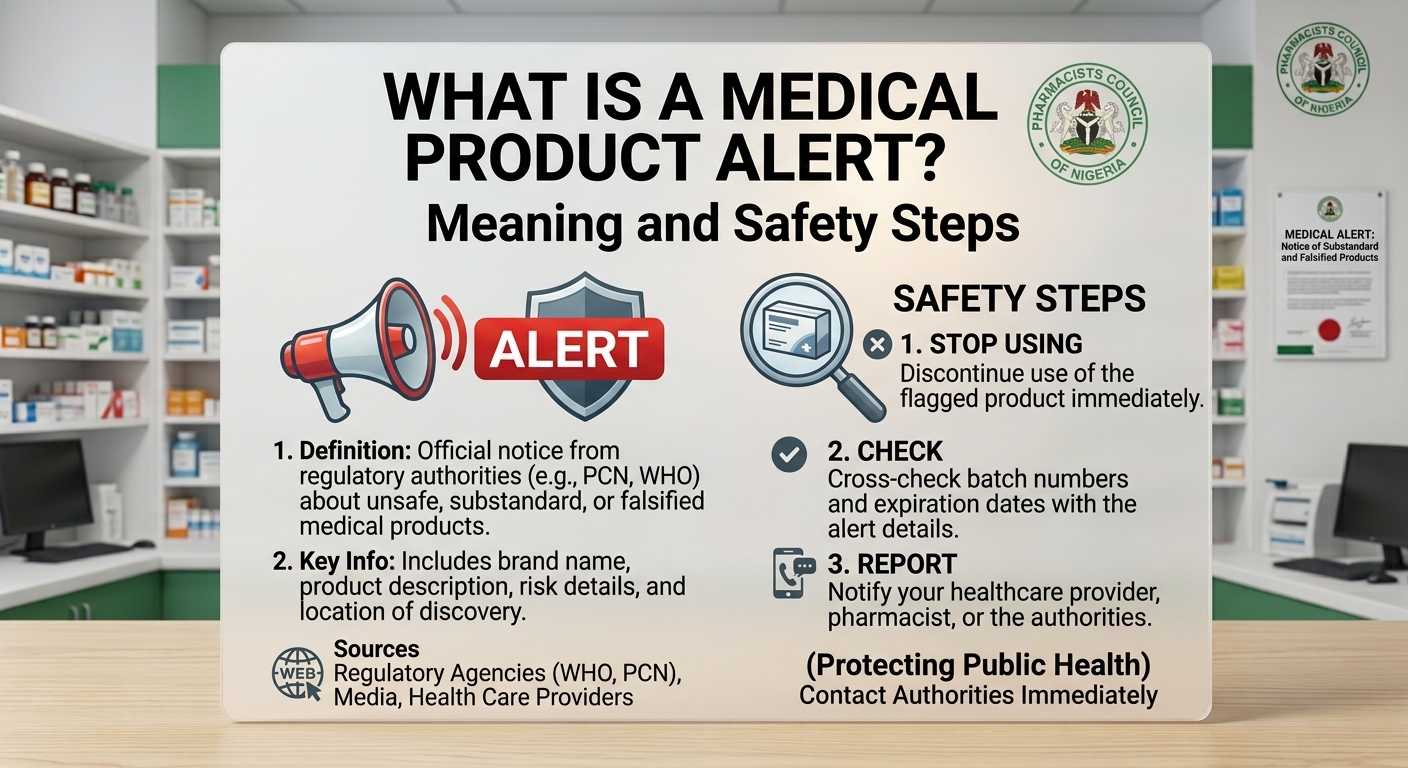
What Is a Medical Product Alert? Meaning and Safety Steps
6 October 20265 min readPublic Health Alert
A medical product alert warns the public about a medicine, medical device or health product that may be unsafe, defective, falsified or substandard. Learn how to check an alert and respond safely.
A medical product alert is an official warning about a medicine, vaccine, diagnostic test, medical device or other health product that may pose a safety, quality, effectiveness or regulatory risk. The alert helps health authorities, healthcare professionals, suppliers and the public identify the affected product and take steps to reduce harm.
An alert does not always mean that every unit of a product is dangerous. It may apply only to specific batches, countries, expiry dates or distribution channels. The notice should therefore be read carefully before deciding whether to stop using, return, or dispose of a product.
What Is a Medical Product Alert?
A medical product alert is a public-health communication issued by a recognised health authority, medicine regulator, manufacturer or international organisation. It provides information about a potential or confirmed problem involving a medical product and explains what action may be needed.
The World Health Organization (WHO) issues medical product alerts mainly when substandard or falsified medical products represent a significant threat to international public health. Before issuing an alert, WHO considers whether the report has been validated, whether a genuine public-health threat exists, whether the product may have spread across borders, and whether adequate steps have been taken to remove it from circulation.
A medical product alert may concern:
A falsified product that deliberately misrepresents its identity, composition or source.
A substandard product that fails to meet required quality specifications.
An unregistered or unauthorised product being marketed without the required regulatory approval.
Frequently Asked Questions
Here are answers to some common questions about this topic.
What is the difference between a medical product alert and a recall?
A medical product alert warns about a potential or confirmed risk involving a medicine, medical device, or other health product. A recall removes or corrects a product. An alert may announce a recall, but it can also warn about a suspected falsified product, a new safety concern, or a device problem.
Does a medical product alert mean that every unit is dangerous?
No. An alert may apply only to specific batches, lot numbers, expiry dates, countries, or product versions. Compare your product with the details in the official notice and follow the instructions provided.
Should I stop taking a medicine mentioned in a medical product alert?
Read the specific instructions in the alert and contact a pharmacist or doctor promptly. Do not stop taking an essential prescribed medicine without professional advice unless the alert specifically tells you to stop using it.
Disclaimer: This article is for informational purposes only. Always consult a qualified healthcare professional for medical advice and visit nafdac.gov.ng for official NAFDAC information.
A manufacturing defect, contamination, incorrect label, packaging problem or incorrect strength.
A medical device that may malfunction or create a risk of harm.
A newly identified medicine safety concern, such as an important warning, contraindication or withdrawal.
The exact terminology differs between countries. For example, the US Food and Drug Administration uses “recall” for certain actions to remove or correct a marketed product that violates applicable law, while a safety communication may provide warnings or instructions without being a formal recall.
Why Do Medical Product Alerts Matter?
of the Medical products can cause harm when they contain the wrong ingredient, too little or too much active ingredient, harmful contamination, or no active ingredient at all. A falsified product may also look similar to the genuine product, making it difficult for consumers to identify without an official alert or laboratory testing.
WHO reports that substandard and falsified products may fail to treat the condition for which they were intended, even when they do not cause an immediate toxic reaction. This can delay effective treatment and may allow illness to worsen.
onAlerts also help coordinate action across borders. WHO’s Global Surveillance and Monitoring System enables national medicine regulators to share information about suspected substandard and falsified products and supports international responses when a product may have a broader geographic impact.
A medical product alert is therefore different from an ordinary product announcement or marketing message. It is intended to communicate a potential or confirmed health risk and the steps needed to protect patients.
What Information Does an Alert Usually Include?
A reliable alert normally identifies the product as precisely as possible. Important details may include:
Product name, strength, dosage form and manufacturer.
Batch or lot number.
Manufacturing date and expiry date.
Registration or authorization number.
Countries or regions where the product was found.
The nature of the defect, contamination or suspected falsification.
Potential risks to patients.
Instructions for patients, healthcare professionals, pharmacies, distributors and regulators.
Reporting or contact information.
Batch numbers are especially important because an alert may affect only particular lots rather than the entire product. Do not assume that a product is safe simply because its name is not listed; compare the product details with the full notice and check the current information from the relevant regulator.
What Should You Do After an Alert?
First, check the alert’s product name, batch number, expiry date, packaging details and affected locations against the product you have. Keep the packaging, leaflet and receipt if available, because they may help a pharmacist or regulator investigate.
If the alert says not to use the affected product, follow that instruction. Do not give it to another person or sell it. Contact a pharmacist, doctor or the relevant medicine regulator to ask about replacement treatment, safe return or disposal. Do not stop an essential prescribed medicine without obtaining professional advice unless the alert specifically instructs you to stop it.
If you have used an affected product and develop symptoms, experience an unexpected reaction or find that it does not work as expected, seek medical advice promptly. WHO advises consumers who suspect a substandard or falsified product to discuss it with a healthcare professional and report the suspicion to the national medicines regulatory authority.
People should also buy medical products from licensed pharmacies, hospitals, clinics or other authorized suppliers. WHO recommends checking packaging, spelling, manufacturing and expiry dates, seals, product appearance and whether the inner and outer packaging details match.
Where Can You Find Reliable Alerts?
Start with the medicine or medical-device regulator in the country where you live. National authorities often publish recalls, safety alerts, blacklists and other notices. In Nigeria, for example, NAFDAC maintains a public recalls and safety alerts page containing notices about medicines, medical devices, cosmetics, food and other regulated products.
For international concerns, check WHO’s Medical Product Alerts page and the regulator named in the notice. Alerts from one country may not automatically apply everywhere, because registration, distribution and regulatory decisions differ between countries.
Conclusion
A medical product alert is an official warning designed to help prevent harm from a defective, contaminated, falsified, substandard, unregistered or otherwise risky health product. Read the details carefully, compare the batch information, avoid using products specifically identified as unsafe and seek advice from a qualified healthcare professional or regulator when uncertain.
Before buying a medicine or health product, consumers should also use licensed suppliers and check relevant registration information and safety alerts.
What should I do if I have already used an affected medical product?
Seek medical advice if you experience an adverse reaction, unexpected symptoms, or treatment failure. Keep the product and its packaging, and report the suspected problem to a healthcare professional or your national medicines regulatory authority.
How can I check whether a medicine is affected by an alert?
Check the official alert for the exact product name, manufacturer, batch or lot number, expiry date, and affected country or region. Do not rely only on the brand name.
Disclaimer: VerifyProduct.ng organizes publicly available information for educational purposes only and does not replace official verification through NAFDAC or any regulatory authority. This platform is not affiliated with NAFDAC or any government agency.