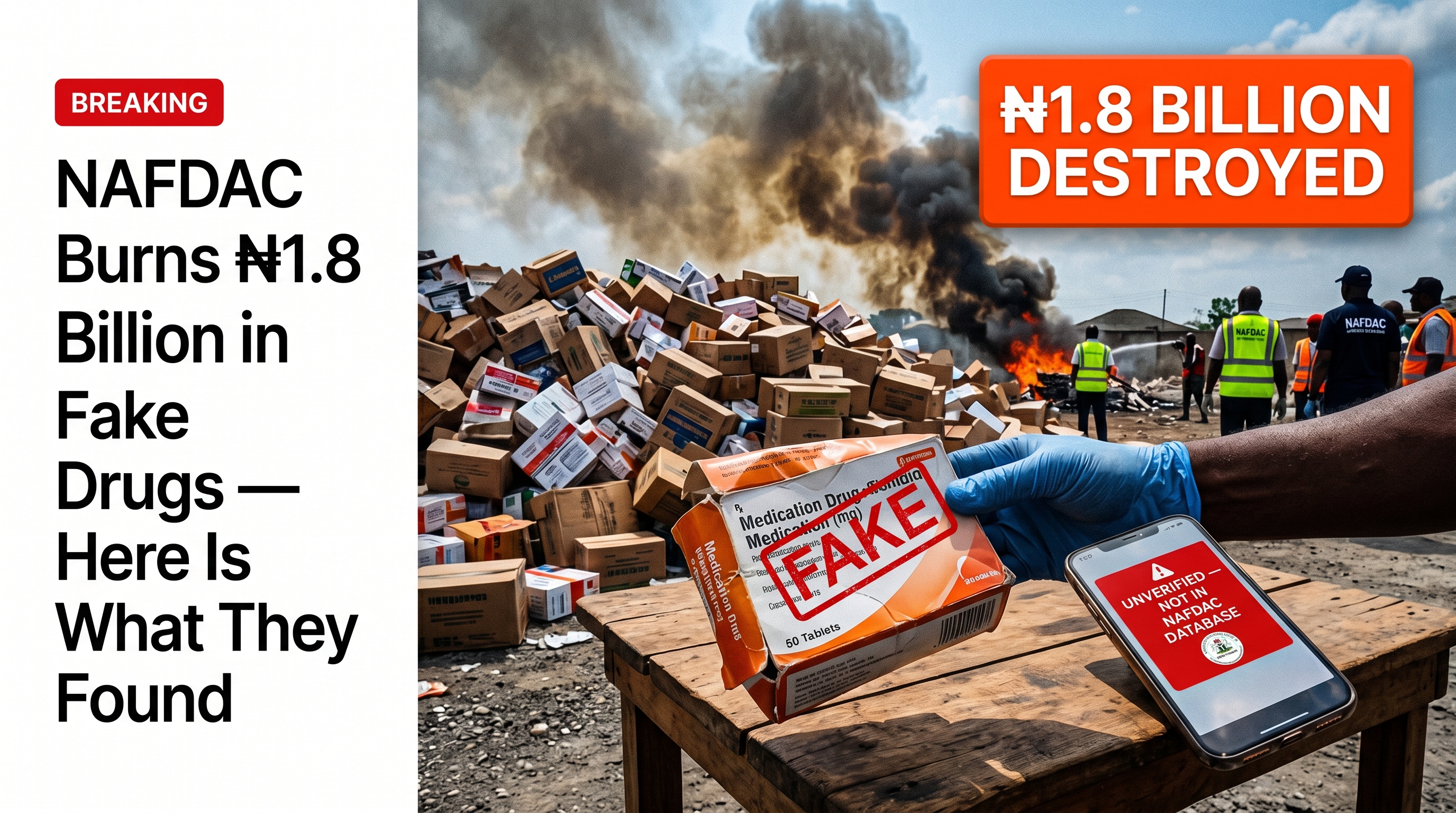
On May 20, 2026, NAFDAC carried out a major operation in Abuja, burning fake drugs and banned alcohol products with a combined value of 1.8 billion naira.
The exercise was part of NAFDAC's ongoing enforcement operations against the production and distribution of substandard, falsified, and prohibited products in Nigeria.
The destruction was significant not just for its scale but for what it revealed about how fake products are entering Nigeria and how increasingly sophisticated the networks behind them have become.
What Was Destroyed and Where It Came From
The products destroyed during the Abuja exercise included a range of fake pharmaceutical products and banned alcoholic beverages.
Some of the items were confiscated during enforcement operations by NAFDAC's Investigation and Enforcement Directorate. Others were voluntarily surrendered by companies, non-governmental organisations, and members of the Association of Community Pharmacists of Nigeria, known as ACPN.
The voluntary surrenders are particularly notable. They suggest that some pharmacists and distributors who had unknowingly received fake products chose to do the right thing by handing them over to the regulator rather than selling them.
The Warning NAFDAC Issued at the Destruction Event
At the destruction exercise, the Director of Investigation and Enforcement, Dr. Martins Iluyomade, delivered a stark warning on behalf of NAFDAC's Director-General, Prof. Mojisola Adeyeye.
Dr. Iluyomade warned that fake drug networks in Nigeria now use advanced cloning methods to imitate genuine products.
The growing sophistication of counterfeit manufacturers, he said, is making it increasingly difficult for consumers to distinguish between an original and a fake.
He further disclosed that NAFDAC recently seized several containers carrying suspicious products at Nigerian ports.
These products had been falsely declared in shipping documents in an attempt to evade detection. This means counterfeits are not only being produced locally but are also being imported in bulk through Nigeria's seaports and airports.
The Price Warning Every Nigerian Must Remember
One of the most direct and actionable warnings NAFDAC delivered at the destruction event is this: avoid buying suspiciously cheap medicines and regulated products.
The agency stated clearly that products sold at unusually low prices could pose serious health risks. This single warning captures the most common entry point for fake drugs into Nigerian households.
When a drug is significantly cheaper than what you would normally pay at a licensed pharmacy, there is a very high probability that something is wrong. Either the product is fake, substandard, or expired, or has been relabelled with tampered dates.
This applies across all categories, including antimalarials, antibiotics, pain relievers, vitamins, and even everyday consumer products like toothpaste and baby food.
Why Nigerian Consumers Are Especially Vulnerable Right Now
1. Inflation Has Made Genuine Drugs Unaffordable
The economic environment in Nigeria has pushed the cost of genuine medicines to levels many households cannot sustain.
When a family cannot afford a genuine antimalarial or antibiotic, the temptation to buy a cheaper version from an unverified source becomes very real.
Counterfeiters understand this vulnerability and exploit it deliberately. They price their fake products just low enough to attract buyers who cannot afford the genuine article.
2. Advanced Cloning Makes Detection Harder
NAFDAC's own admission that counterfeits are now produced using advanced cloning methods means the days when a fake drug was obviously distinguishable by poor packaging are over.
Modern counterfeits can look almost identical to the genuine product, with packaging, labelling, and even hologram stickers that replicate the original closely.
This is why verification through official databases and tools like VerifyProduct.ng has become more important than ever.
What the N1.8 Billion Figure Tells Us
The 1.8 billion naira in fake products destroyed in Abuja in a single operation is not the total value of fake products in Nigeria. It is just what was caught and destroyed in one exercise, in one city, during one period.
NAFDAC has previously destroyed products worth over 120 billion naira between July and December 2024 alone.
These figures represent an enormous volume of dangerous products that were successfully removed from the market. They also represent an enormous volume that was not caught.
How to Protect Yourself
Always Buy From Licensed Sources
Purchase all medicines and regulated products from licensed pharmacies with a visible Pharmacists Council of Nigeria registration certificate. For food and consumer products, buy from registered supermarkets and retail chains.
Verify Before You Buy
Use VerifyProduct.ng to check the NAFDAC registration number of any drug or product before you purchase it. This takes under a minute and is completely free.
Report Suspicious Products
If you come across a product that looks suspicious, do not simply avoid buying it. Report it. Use the NAFDAC Med Safety App or call 0800-162-3322. Your report could prevent others from being harmed.
Never Buy Medicine From Open Markets
The highest concentration of fake drugs in Nigeria is found in open drug markets, including parts of Onitsha, Aba, and Lagos.
NAFDAC has repeatedly conducted raids in these locations and continues to find fake products. Avoid buying any medicine from these sources.