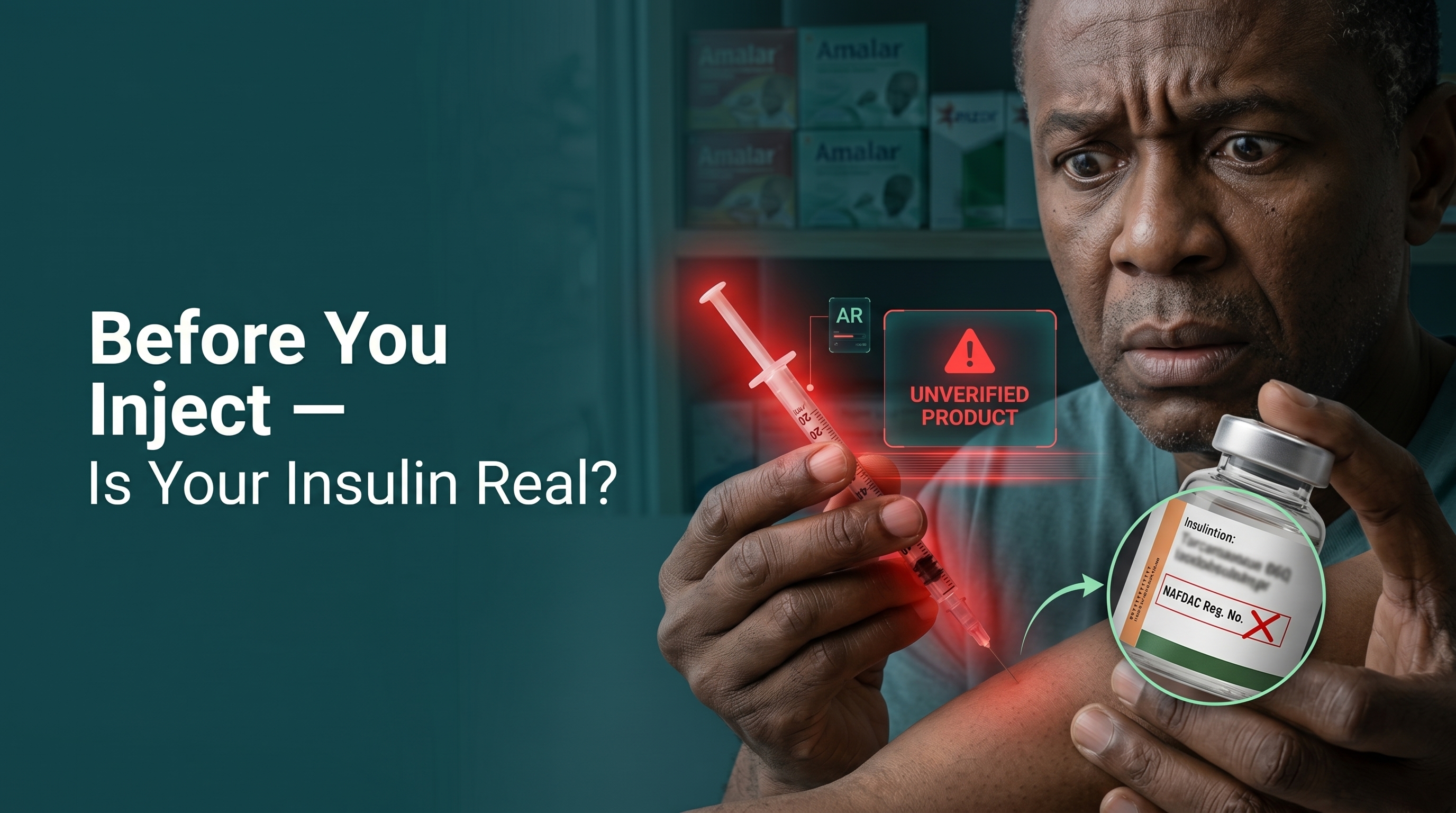
For someone living with diabetes, insulin is not optional. It is the absolute difference between a controlled blood sugar level and a life-threatening metabolic crisis. This critical dependency is precisely why counterfeit insulin is among the most dangerous segments of the fake drug problem in Nigeria.
Unlike common pain relievers like paracetamol, where a counterfeit version simply fails to offer relief, fake insulin can actively cause death.
Why Fake Insulin Is Particularly Deadly
When a diabetic patient injects insulin, they expect their blood glucose level to drop to a safe margin within a strict, predictable window. If the medication contains zero active ingredients, blood sugar levels remain dangerously elevated. This can rapidly push the body into diabetic ketoacidosis (DKA), a severe medical emergency that can result in a coma or death within a matter of hours if left untreated.
Conversely, if the counterfeit product contains an incorrect, highly concentrated dose of the active ingredient, blood sugar levels can crash precipitously. This leads to severe hypoglycaemia (low blood sugar), which is equally life-threatening and causes immediate brain distress.
In diabetes management, there is no margin for error. The medication must match its labelling exactly.
Insulin Brands Registered in Nigeria
Several legitimate insulin formulations are explicitly registered with the National Agency for Food and Drug Administration and Control (NAFDAC) for distribution and sale. The primary options available in Nigerian hospitals and pharmacies include:
Mixtard 30 (Insulin Human, Biphasic): Manufactured by Novo Nordisk. This is one of the most commonly prescribed maintenance insulins in the country.
Humulin (Regular and NPH): Manufactured by Eli Lilly. It is frequently distributed in 70/30 and N formulations.
Actrapid (Insulin Human, Soluble): Manufactured by Novo Nordisk. This version is used for rapid, immediate blood sugar control.
Insuman (Human Insulin): Manufactured by Sanofi.
Each legitimate package features a distinct NAFDAC registration number printed clearly on both the outer box and the vial label. These numbers can be checked for authenticity via accessibility platforms like VerifyProduct.ng.
How to Verify Your Insulin Before Use
To protect yourself from compromised or counterfeit medical products, implement these four verification checks before every injection:
1. Cross-Check the NAFDAC Number
Genuine insulin must feature matching registration information on both the outer carton and the internal vial or pen cartridge. If the numbers do not line up, or if the internal vial lacks official NAFDAC labelling entirely, do not use the product.
2. Inspect the Physical Appearance of the Liquid
The visual characteristics of the fluid must match the specific formula type:
Suspension Insulins (Mixtard 30 and Humulin 70/30): These contain suspended crystals and must appear uniformly cloudy or milky after being gently rolled between your palms.
Soluble Insulins (Actrapid and Regular): These must always look completely clear and colorless, without any floating particles or sediment.
If the appearance does not match the standard properties of your specific formulation, do not inject it.
3. Evaluate the Supply Chain Cold Storage
Insulin requires strict cold chain management and must be kept refrigerated between 2°C and 8°C until it is opened. If a distributor or vendor cannot confirm continuous cold storage, or if the product has been left at room temperature for an unverified period, the insulin is compromised—regardless of whether it is authentic or counterfeit.
4. Source Exclusively from Licensed Facilities
Never purchase insulin from open public markets, roadside drug stalls, or unverified social media vendors. Limit your purchases entirely to registered pharmacies with physical addresses or directly from internal hospital dispensaries.
What to Do If You Suspect Your Insulin Is Counterfeit
If you suspect your medication is fake, do not inject it. Contact your physician or visit the nearest hospital immediately to secure a verified supply. Retain the suspicious vial safely as evidence, and report the facility where it was purchased directly to NAFDAC.
Emergency Contact: You can reach NAFDAC's official complaints line at 0800-162-3322 or submit the data through VerifyProduct.ng.
If you have already administered a suspected counterfeit product and experience symptoms such as severe dizziness, acute confusion, unusual extreme thirst, or rapid breathing, proceed to an emergency room immediately. Ensure you inform the medical staff on duty that you may have been exposed to a substandard or falsified medicine.
For diabetics across Nigeria, the ultimate rule remains vital: verify before you inject. Your life depends on it.
Verify a Product Now — Check if your medicine is officially registered with NAFDAC. Free, instant, and mobile-optimised search.