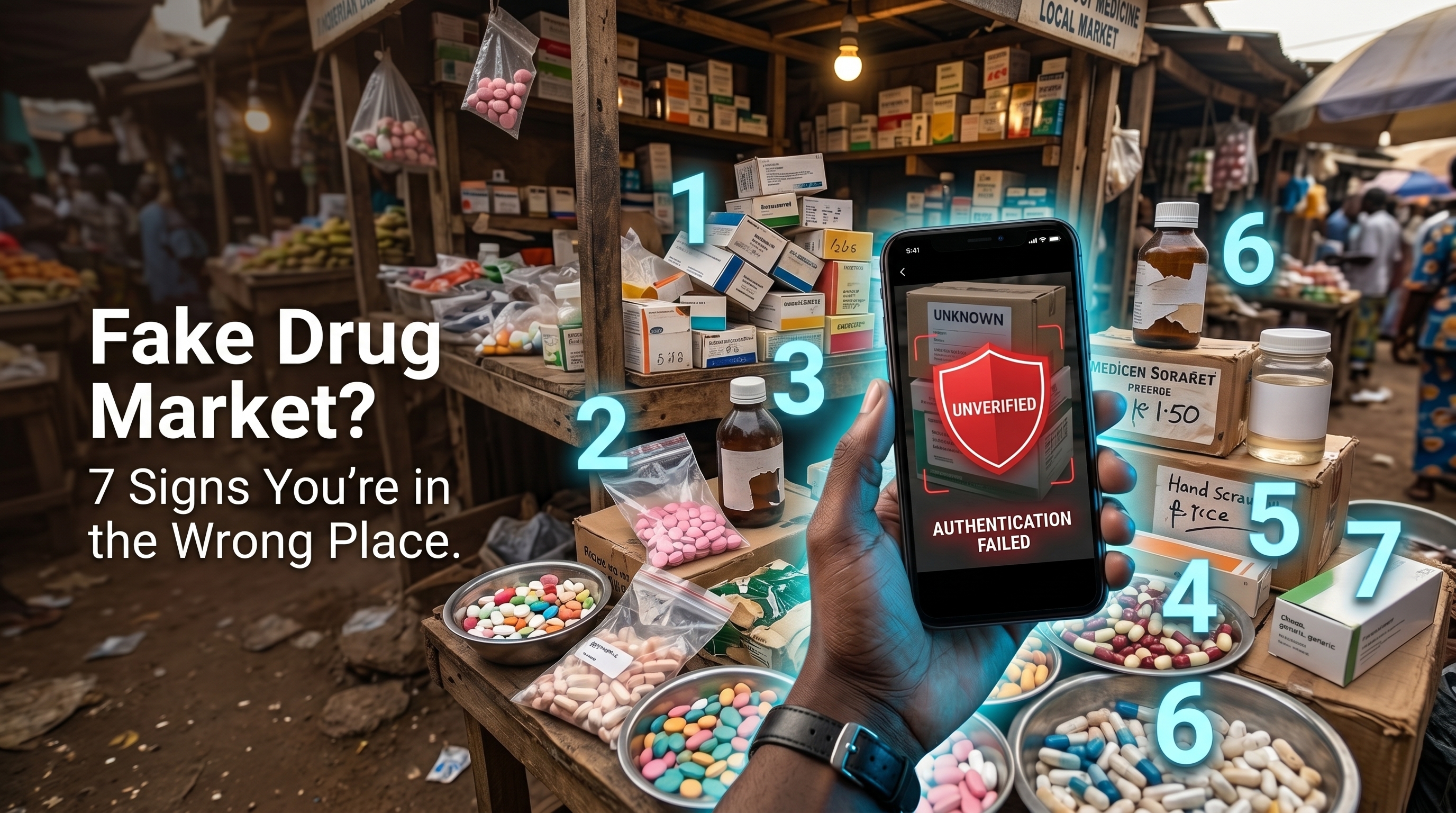
The crisis of counterfeit pharmaceutical distribution does not begin with the medication itself. It starts at the point of sale.
The National Agency for Food and Drug Administration and Control (NAFDAC) has repeatedly established that the distribution networks for counterfeit and substandard medicines flow through specific, unregulated markets and vendors. Recognising these operational warning signs before making a purchase is one of the most effective ways to protect your health.
7 Major Signs of an Unsafe Medicine Vendor
1. Lack of a Fixed Address or Official Signboard
A licensed pharmacy or patent medicine shop is legally required to operate from a permanent, registered address. It must display a prominent signboard showing the business name and an official PCN license number issued by the Pharmacy Council of Nigeria.
If a vendor operates without a fixed location, selling from a temporary stall, an open table, a commercial bus, or as a mobile street hawker, they exist entirely outside the regulated healthcare system.
2. Retail Prices That Fall Significantly Below Market Average
Every legitimate pharmaceutical product has a strict cost floor dictated by manufacturing standards, import duties, and rigorous regulatory compliance.
A medication sold at 40% to 60% below the standard retail pharmacy rate is not a bargain; it is a critical red flag. Because manufacturers of counterfeit drugs bypass all regulatory compliance costs, they can price products abnormally low while maintaining high profit margins. If a price seems too good to be true, the product is highly likely to be falsified.
3. Openly Displayed Drugs Without Environmental Climate Control
Many essential medications, especially antibiotics, insulin vials, specialised eye drops, and liquid syrups, require strict temperature controls to remain stable.
A market stall that exposes medicine to direct sunlight, high humidity, or open-air dust has already ruined the therapeutic value of those products. Even if the medicine was originally genuine, poor storage turns it into a compromised, hazardous substance.
4. Absence of Translucent Supply Chain Proof or Receipts
Legitimate pharmaceutical retailers can easily name and verify their registered distributors or wholesale channels. If a vendor provides vague, evasive answers when asked about their source such as "I buy from a supplier in the market" or "It came from an open market in Onitsha" without specific company details, the supply chain is unverified, unmonitored, and unsafe.
5. Pharmaceutical Products Completely Lacking NAFDAC Numbers
This is the most definitive indicator of an illegal product. Every drug approved for legal distribution in Nigeria must carry a distinct NAFDAC registration number printed clearly on the outer packaging.
If you inspect a medication pack and find no registration details, the item is either completely unregistered or the original labelling has been intentionally defaced.
6. Vendor Inability or Refusal to Answer Basic Safety Questions
A licensed, professional healthcare provider will gladly point out safety features or verify a product's registration status for a concerned patient.
If a seller responds to simple questions about NAFDAC registration or batch details with hostility, confusion, or dismissal, they are running an illicit operation rather than a professional health outlet.
7. Operating Within Hubs Known for Counterfeit Distribution
NAFDAC enforcement operations frequently flag specific geographic zones for high concentrations of substandard pharmaceuticals. These include informal drug clusters adjacent to major commercial hubs, certain uncoordinated sections of large regional markets, and roadside transport hubs in major cities. While honest retailers do exist in large commercial areas, your level of caution and scrutiny must double when sourcing products near these unregulated zones.
The Core Rule of Consumer Safety
Only purchase pharmaceuticals from fixed, physical establishments that can display a valid PCN licence and verify their direct wholesale source. Before administering any medication, take a few seconds to verify the printed NAFDAC number online via VerifyProduct.ng.
The Takeaway: Spending five seconds to run an authenticity check remains the single most effective, low-cost health insurance available to consumers in Nigeria.
CTA: [Verify a Product Now] — Check if your medicine is officially registered with NAFDAC. Free, instant, and mobile-optimised search.