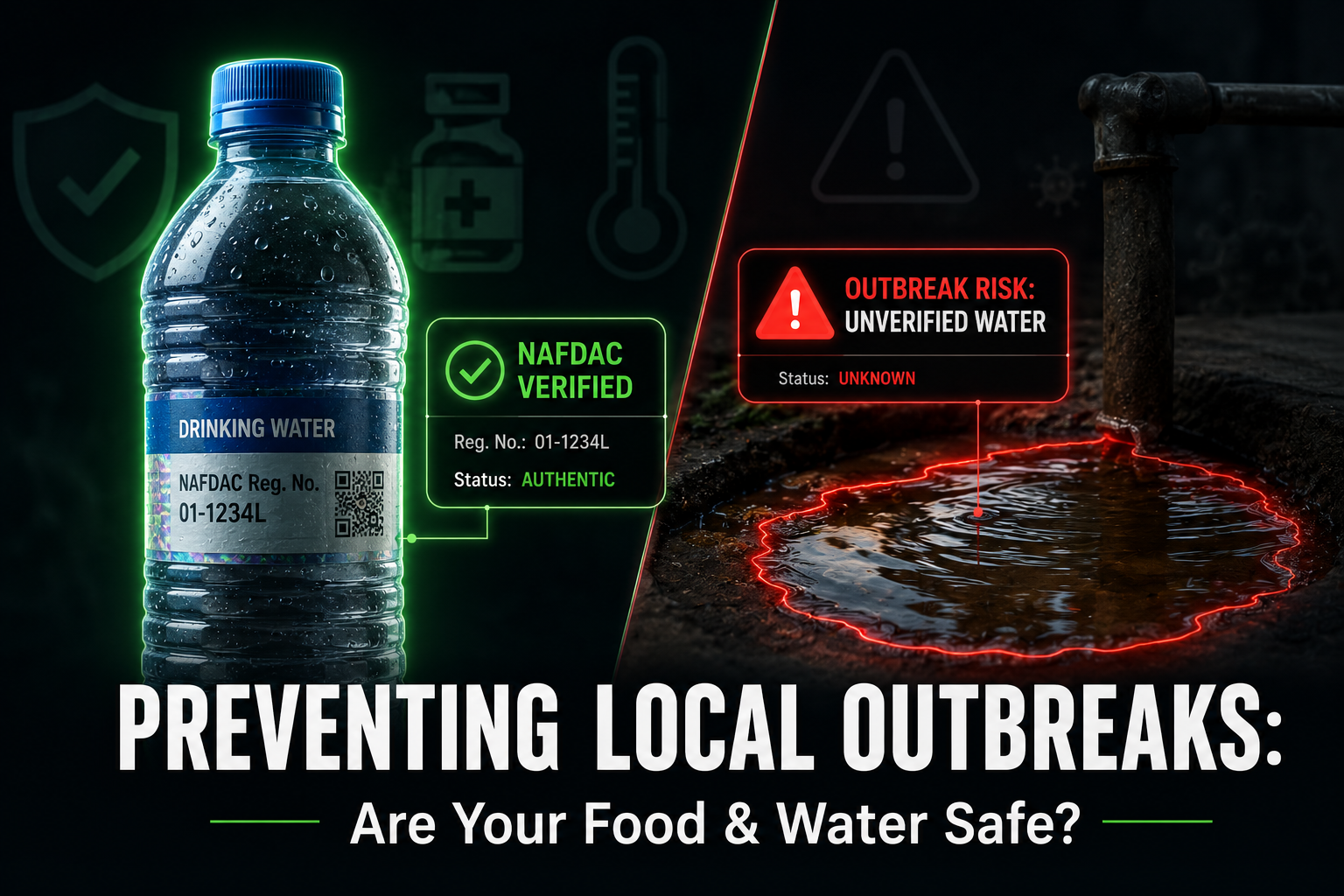
While public attention often shifts toward foreign health scares, Nigeria is actively fighting three major domestic health threats: Diphtheria, Lassa Fever, and seasonal Cholera. Driven by rainy-season contamination, vaccination gaps, and delayed hospital visits, thousands of cases are flooding local healthcare facilities. Here is what you need to know about these ongoing outbreaks and how to protect your household.
📋 In This Article
1. What Is Driving The Current Outbreaks
2. Diphtheria: The Unvaccinated Threat
3. Lassa Fever: Year-Round Rodent Contamination
4. Cholera: Heavy Rains and Unsafe Water Sources
5. Red Flags To Watch For Across All Three Diseases
6. How To Protect Your Home And Verify Product Safety
7. Frequently Asked Questions
When an outbreak hits local communities, early recognition is the single most important factor determining survival. Across Nigeria, current updates from disease surveillance teams show that simple delay, whether in seeking care or treating drinking water, remains the biggest cause of preventable deaths.
These three diseases spread differently, but they share a common feature: everyday environmental exposures in local homes and markets trigger their transmission.
🔑 Quick Answer
Diphtheria: Re-emerging primarily due to childhood routine vaccination gaps. It spreads through air droplets and causes a thick, dangerous gray membrane in the throat.
Lassa Fever: A viral hemorrhagic fever carried by rodents. Over 1,000 confirmed cases and 237 deaths have been recorded in 2026 so far, concentrated heavily in states like Ondo, Bauchi, Taraba, Edo, and Benue.
Cholera: Triggered by heavy rainy-season flooding that contaminates community drinking water and open-market produce, causing severe, rapid dehydration.
Preventive safety relies on checking your household water purification methods, maintaining rodent-proof food storage, and ensuring children's routine immunisation schedules are fully up-to-date.
What Is Driving The Current Outbreaks In 2026
Health authorities nationwide are managing a combination of airborne, waterborne, and rodent-borne diseases. Heavy seasonal rainfall overwhelms basic drainage infrastructure, while economic pressures tempt families to bypass routine health checks or buy unverified water and medicines from informal vendors.
Disease control reports indicate that a major driver of high fatality rates is "late presentation"—patients arriving at treatment centers days after severe symptoms have already taken hold.
Diphtheria: The Unvaccinated Threat Diphtheria is a serious bacterial infection that attacks the respiratory system. While completely preventable through the Pentavalent vaccine, immunisation gaps have allowed the disease to re-emerge in several northern states.
For example, Niger State recently reported 17 deaths among 124 confirmed cases, with health officials actively conducting emergency mass vaccination drives to close immunity gaps in affected local government areas like Bida, Shiroro, and Suleja.
How It Spreads: Through direct physical contact or coughing and sneezing from an infected person.
Key Symptoms: A severe sore throat, high fever, swollen neck glands ("bull neck"), and a thick gray coating covering the back of the throat or tonsils.
The Danger: Without rapid antitoxin and antibiotic treatment, the gray membrane can block a child's airway entirely, or bacterial toxins can cause heart failure.
Lassa Fever: Year-Round Rodent Contamination
Lassa fever remains one of Nigeria's most persistent viral challenges. Data from the Nigeria Centre for Disease Control and Prevention (NCDC) reveals that over 1,000 confirmed cases and 237 deaths have been recorded in 2026 across 23 states.
The case fatality rate sits at a high 23.7%, with five primary states—Ondo (32%), Bauchi (25%), Taraba (13%), Edo (10%), and Benue (6%)—accounting for 86% of all confirmed cases. Alarmingly, over 50 healthcare workers have also been infected this year while treating arriving patients.
How It Spreads: Contact with food, water, or household items contaminated by the urine or feces of the Mastomys rat. Human-to-human spread also occurs through infected body fluids.
Key Symptoms: Starts like a stubborn malaria fever, accompanied by facial swelling, severe headache, muscle pain, and sore throat. In advanced stages, unexplained bleeding from the nose, mouth, or gums occurs.
The Danger: Delayed medical care leads to multi-organ failure. Ribavirin, the main antiviral drug used for treatment, works best when administered within the first few days of fever.
Cholera: Heavy Rains and Unsafe Water Sources
Whenever heavy rains hit, cholera outbreaks spike rapidly across communities with inadequate water and sanitation infrastructure. Recent surges in Borno State saw thousands of acute watery diarrhea cases flood regional treatment units, while localized outbreaks in states like Plateau confirmed multiple sudden deaths.
How It Spreads: Consuming water or food contaminated by the Vibrio cholerae bacteria, often sourced from flooded wells, polluted rivers, or unwashed market items.
Key Symptoms: Sudden, painless, profuse watery diarrhea (often described as "rice-water stool") and severe vomiting.
The Danger: Cholera can kill an adult or child within hours due to extreme dehydration if fluids are not replaced immediately via Oral Rehydration Salts (ORS) or intravenous drips.
Red Flags to Watch For Across All Three Diseases
Disease | Primary Warning Signs | High-Risk transmission point | Immediate action needed |
|---|---|---|---|
Diphtheria | Thick gray film in throat, sore throat, swollen neck glands | Air droplets from coughing or sneezing in crowded areas | Urgent isolation, antibiotic therapy, and antitoxin |
Lassa Fever | Fever not responding to antimalarials, bleeding from gums or nose | Open stored food contaminated by rodents | Immediate hospitals admission for antiviral treatment |
Cholera | Sudden profuse "rice-water" diarrhea, severe vomiting, fast weakness | Unboiled well water, floodwater, unwashed street food | Administer Oral Rehydration Salts (ORS) and rush to a clinic. |
How to Protect Your Home and Verify Product Safety
Preventing these local outbreaks requires basic, daily sanitation protocols at home:
Verify Water Quality: Do not rely solely on the appearance of clear water. Treat or boil all drinking water, or use verified, sealed sachet and bottled water carrying valid NAFDAC numbers.
Rodent-Proof Your Kitchen: Store all food items—especially grains, garri, and flour—in tightly sealed plastic or metal containers to prevent rat contact. Never dry food items directly on the open ground along roadsides.
Complete Routine Childhood Vaccines: Ensure your children receive all Pentavalent vaccine doses (which protect against Diphtheria) at primary health centers. Routine immunizations are provided free at public health centers.
Practice Clean Food Handling: Wash raw fruits and vegetables thoroughly under safe running water, and avoid open defecation around residential areas.
🛡️ Verify Health Products and Water Quality Seals
Always check product registration, seal integrity, and batch details on verifyproducts.ng before purchasing packaged water, home disinfectants, or over-the-counter medicines. Verify a Product Now →
Frequently Asked Questions
Can Lassa fever be treated if caught early?
Yes. Early treatment with antiviral medications significantly increases survival rates. The high death rate is largely due to patients seeking care late.
Is the Diphtheria vaccine free in Nigeria?
Yes. Diphtheria vaccines are part of Nigeria's routine childhood immunization schedule and are provided free of charge at primary health centers.
How can I make sure my drinking water is safe from Cholera?
Boil water thoroughly for at least one minute before drinking, or treat it with chlorine water purification tablets following package instructions.
Why do Lassa fever cases increase during certain seasons?
Dry weather often drives wild rodents into homes searching for food, while seasonal farm activities bring humans into closer contact with rat habitats.
Are adults at risk of getting Diphtheria?
Yes. While children are most vulnerable, adults who were never vaccinated or whose immunity has faded over time can contract and spread the infection.
This article is for general education and does not replace professional medical advice. If you or a family member exhibit severe fever, unexplained bleeding, or severe diarrhea, visit the nearest healthcare facility immediately.