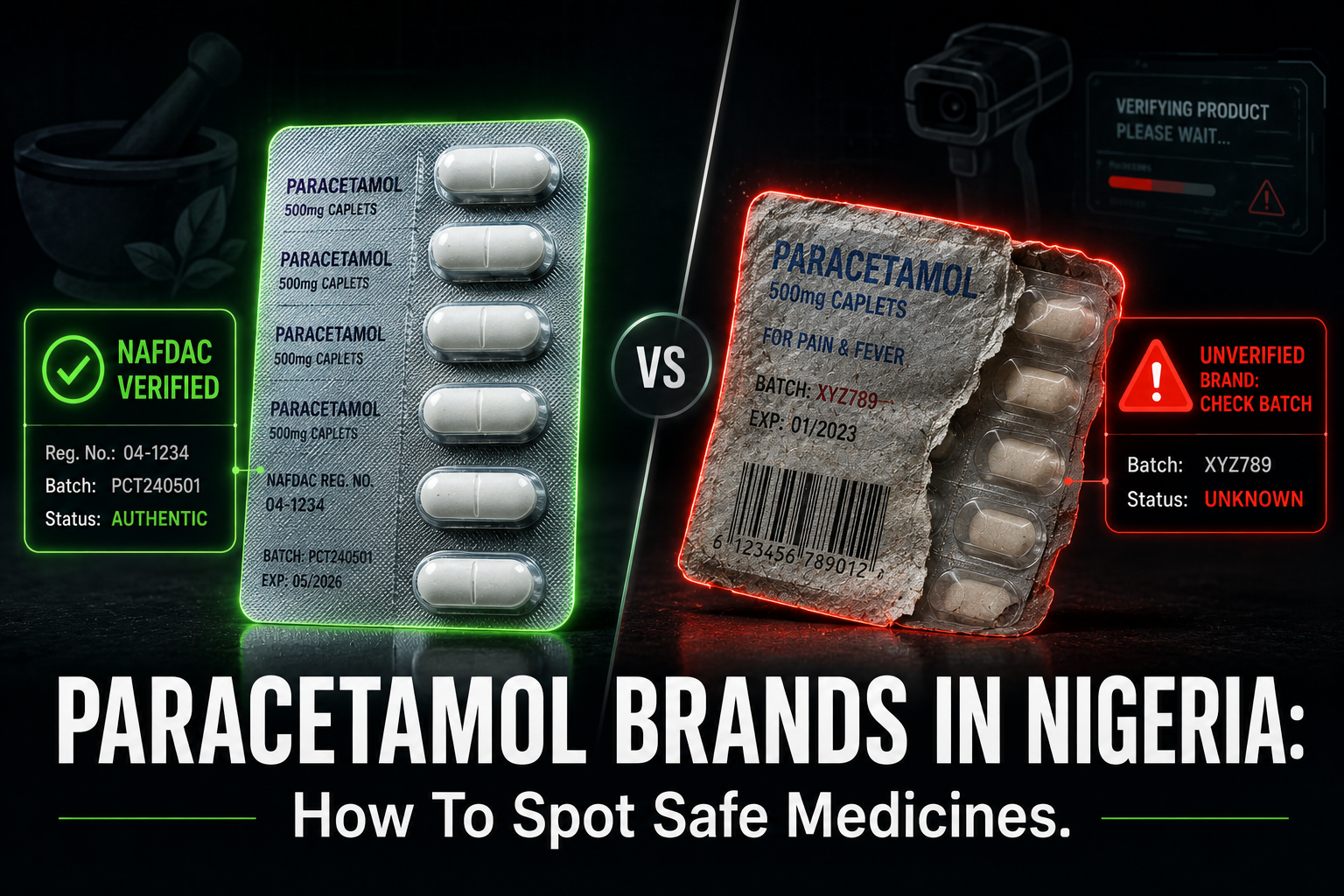
Paracetamol is the most widely purchased over-the-counter pain reliever across Nigerian households. Whether managing a sudden fever, headache, or general body pain, millions rely on it daily.
However, with dozens of local and imported brands lining pharmacy shelves, consumers must understand how to navigate quality standards, dosage rules, and regulatory safety alerts. Here is what you need to know to make safe choices for your health.
📋 In This Article
Why Paracetamol Is Nigeria's Go-To Medication
Common NAFDAC-Registered Brands You Will See
The Myth Of The "Under-Dosed" Tablet
Falsified And Mislabelled Alerts To Watch Out For
The Hidden Danger Of Over-the-Counter Overuse
How To Verify Your Medicine Before Buying
Frequently Asked Questions
When pain strikes, most Nigerians head straight to a chemist or pharmacy asking for "paracetamol." Because it is readily available without a prescription, many view it as completely harmless.
Yet, as with any pharmaceutical product, quality control, correct dosage, and supply chain verification are critical. Knowing how to distinguish registered, properly formulated brands from unregistered or falsified batches protects you and your family from unexpected health risks.
🔑 Quick Answer
Widespread Availability: Over 90 paracetamol brands and formulations are registered with NAFDAC in Nigeria, including tablets, caplets, syrups, drops, and intravenous infusions.
Quality Verification: Official laboratory investigations by NAFDAC confirm that locally manufactured paracetamol tablets from registered companies meet full British Pharmacopoeia dosage standards.
Supply Chain Risks: Falsified injections and substandard imported syrups have occasionally triggered regulatory alerts, reinforcing the need to check packaging details.
Dosage Safety: Accidental overuse of paracetamol across multiple combination cold or pain drugs remains a major cause of liver strain and toxicity.
Why Paracetamol Is Nigeria's Go-To Medication
Paracetamol (also known as acetaminophen) is an analgesic and antipyretic drug. It treats mild-to-moderate pain such as headaches, toothaches, menstrual cramps, and muscle aches and helps reduce body temperature during fevers.
Its popularity in Nigeria stems from its affordability, quick action, and relative gentleness on the stomach compared to Non-Steroidal Anti-Inflammatory Drugs (NSAIDs) like ibuprofen or aspirin.
Common NAFDAC-Registered Brands You Will See
Nigeria has a robust domestic pharmaceutical manufacturing sector alongside authorized importers. When shopping at a licensed pharmacy, you will encounter various trusted brand names produced in different formats:
Adult Tablets and Caplets (500mg): Widely recognized options include Emzor Paracetamol, Panadol, Emcap, Bioramol, Paradana, and Dr. Meyer’s Painkill.
Children's Syrups and Suspensions: Formulations designed for young children include Panda Syrup, Emzor Paracetamol Syrup, Drugamol, and Leadamol.
Infant Drops: Concentration-specific drops for infants include Panda Drops, Bioramol Drops, and Rexall Drops.
Hospital & Clinical Formulations: Specialized preparations like intravenous infusions (e.g., Paranelb or Avipol) are reserved for clinical settings under medical supervision.
The Myth Of The "Under-Dosed" Tablet
In recent times, viral social media posts claimed that nearly all paracetamol tablets sold in Nigeria were severely under-dosed and ineffective. These claims created widespread panic among healthcare consumers.
To address public concern, NAFDAC’s Central Drug Control Laboratory conducted comprehensive testing on paracetamol tablets sampled from pharmacy outlets across major cities like Lagos and Abuja.
The scientific results revealed a 100% pass rate. All tested samples from local manufacturers met the required active pharmaceutical ingredient standards specified by the British Pharmacopoeia monograph.
This investigation reaffirmed that registered locally produced paracetamol tablets retain their intended strength and quality when purchased from legitimate supply chains.
Falsified And Mislabelled Alerts To Watch Out For
While genuine tablets pass quality checks, criminal syndicates occasionally attempt to pass off falsified or mislabelled products.
For instance, NAFDAC issued a public safety alert regarding falsified paracetamol injections circulating in parts of the country. The counterfeit product carried misleading labels claiming it was an "Aminoglycoside Antibacterial"—an entirely different class of strong antibiotics. Laboratory testing confirmed the liquid contained only paracetamol, posing severe clinical risks to hospital patients who required actual antibiotic therapy.
Similarly, international alerts have flagged substandard imported paracetamol suspensions containing toxic industrial solvents like ethylene glycol. These incidents demonstrate why inspecting physical packaging and checking registration details remains essential.
The Hidden Danger Of Over-the-Counter Overuse
Because paracetamol is so easily accessible, many consumers take it without calculating their total daily intake. This leads to accidental overdose through common mistakes:
Combining Multiple Medicines: Many multi-symptom flu remedies, cold caplets, and night syrups already contain 500mg of paracetamol per dose. Taking standard paracetamol tablets alongside these combination drugs doubles your intake unnecessarily.
Exceeding Daily Limits: For an adult, the maximum safe daily limit is strictly 4,000mg (eight standard 500mg tablets) within 24 hours. Exceeding this limit causes toxic buildup in the liver, leading to permanent liver damage.
Ignoring Dosing Tools for Children: Using ordinary kitchen spoons instead of calibrated measuring cups or syringes when giving syrup to children often leads to accidental under-dosing or dangerous over-dosing.
How To Verify Your Medicine Before Buying
To protect yourself from substandard or falsified pain relievers, adopt these straightforward verification habits:
Inspect NAFDAC Numbers: Every genuine drug pack sold in Nigeria must display a valid NAFDAC registration number (e.g., 04-0411 or A4-7579).
Examine Packaging Quality: Look closely at the print quality, foil seals, batch numbers, and expiry dates. Faded text, misspellings, or broken seals are clear warning signs.
Buy From Licensed Outlets: Avoid purchasing medicines from roadside hawkers, open market stalls, or buses. Always buy from registered retail pharmacies or hospital dispensaries.
Report Suspicious Packaging: If a tablet crumbles abnormally, tastes unusual, or causes unexpected side effects, stop taking it and report the batch details to the nearest NAFDAC office.
🛡️ Verify Pain Relievers and Medications Online
Check product names, NAFDAC numbers, and batch details on verifyproducts.ng before administering any medication to yourself or your family. Verify a Product Now →
Frequently Asked Questions
Is Panadol different from Paracetamol?
No. Panadol is simply a popular brand name for the active drug paracetamol. They perform the exact same function in the body.
Can I take paracetamol on an empty stomach?
Yes. Unlike non-steroidal anti-inflammatory drugs like ibuprofen, paracetamol does not irritate the stomach lining and can be taken before or after meals.
What is the correct paracetamol dose for an adult?
The standard adult dose is one or two 500mg tablets (500mg to 1000mg) taken every 4 to 6 hours as needed. Never exceed eight 500mg tablets in 24 hours.
Why shouldn't I drink alcohol while taking paracetamol?
Both alcohol and paracetamol are processed by the liver. Combining them increases the risk of severe liver toxicity and strain.
How do I report a suspected fake paracetamol brand?
You can report suspicious drug products to NAFDAC through their official website, email alert channels (
sf.alert@nafdac.gov.ng), or via their Med-Safety reporting app.
This article is for general education and does not replace professional medical advice. Always consult a qualified doctor or pharmacist if your fever or pain persists for more than three days.