📋 In This Article
What Actually Happened, And Is Still Happening
Why Cough Syrup Specifically
This Is Not New To Nigeria
How Contamination Slips Into A Supply Chain
Red Flags To Watch For
Genuine vs Suspect: A Quick Comparison
The Myth That Big Brands Cannot Be Affected
How To Actually Verify What You Give Your Child
Frequently Asked Questions
Most parents assume that once a medicine reaches a pharmacy shelf, someone somewhere has already confirmed it is safe. For the most part, that assumption is reasonable. But over the past few years, the World Health Organisation has issued repeated global alerts about a specific and preventable danger hiding inside something as ordinary as children's cough syrup, and the story is far from over.
This is not a rumour or a single isolated incident in one country. It is a documented, actively monitored global pattern, and it has directly affected Nigeria more than once.
🔑 Quick Answer
Since 2022, the World Health Organisation has issued multiple global medical product alerts about children's cough syrups contaminated with diethylene glycol and ethylene glycol, industrial chemicals never meant to be in medicine.
These incidents have been linked to more than 300 child deaths across several countries, including cases connected to Nigeria going back decades.
Contamination often happens during manufacturing when a cheaper industrial solvent is substituted for a pharmaceutical-grade ingredient, and it can affect products from both small and well-known manufacturers.
Checking a product against a verification platform before giving it to a child adds a real layer of protection that packaging alone cannot provide.
What Actually Happened, And Is Still Happening
Starting in 2022, WHO issued a series of global medical product alerts after countries including the Gambia, Indonesia, and Uzbekistan reported children dying after taking contaminated cough syrups. Laboratory testing found dangerously high levels of diethylene glycol and ethylene glycol in the products, chemicals normally used as industrial solvents and antifreeze agents. These substances are toxic even in small amounts and should never appear in medicine at all.
The pattern did not stop there. Similar contamination was later confirmed in products linked to Cameroon and again in 2025 in cough syrups manufactured in India, where specific batches were found to contain extremely high concentrations of diethylene glycol, in one case making up close to half the product itself. Across these incidents combined, WHO and partner agencies have recorded more than 300 confirmed child deaths, most of them under the age of five.
Why Cough Syrup Specifically
Cough syrups and other liquid medicines rely on a solvent, an ingredient that dissolves the active medicine into a liquid form a child can swallow easily. The correct solvent for this job is usually propylene glycol or glycerin, both considered safe for consumption. Diethylene glycol looks and behaves similarly during manufacturing, and it is significantly cheaper.
That similarity is exactly the danger. A manufacturer using an unqualified or unverified supplier can receive diethylene glycol labelled or mistaken for a safe solvent, and unless proper testing is done on every batch, the contamination goes completely undetected until children start getting sick. Diethylene glycol poisoning typically causes acute kidney injury, and in young children it can be fatal within days of exposure.
This Is Not New To Nigeria
This is not only a story about other countries. Nigeria has its own documented history with exactly this problem, and it goes back decades.
In 1990, dozens of children died at a teaching hospital in Jos after taking paracetamol syrup that had been adulterated with diethylene glycol instead of the correct solvent. Years later, a contaminated teething mixture caused another wave of child deaths, again traced back to diethylene glycol from an improperly sourced ingredient. More recently, in 2023, NAFDAC recalled a batch of a well-known imported children's cough syrup brand after laboratory testing found unacceptable levels of diethylene glycol, part of a wider recall that also affected several other African countries at the same time.
Nigeria is one of very few countries that has experienced this exact type of poisoning event more than once. That history is precisely why ongoing vigilance, not a one-time regulatory fix, matters here specifically.
How Contamination Slips Into A Supply Chain
A few conditions repeatedly show up across these global incidents:
Manufacturers sourcing raw ingredients from unregistered or unverified suppliers, sometimes to cut costs, without properly testing each batch for purity before use.
Industrial-grade chemicals entering a supply chain either through fraud, mislabelling, or simple failure to distinguish pharmaceutical-grade material from industrial-grade material.
Weak or inconsistent batch testing at the manufacturing stage, meaning contamination in one batch can reach consumers even if other batches from the same company are genuinely safe.
Products crossing borders faster than regulatory alerts can, so a contaminated batch identified in one country may still be sitting on a shelf in another before recall notices catch up.
Red Flags To Watch For
Because this type of contamination cannot be seen, smelled, or tasted reliably by a parent, prevention depends more on sourcing and verification than on inspecting the bottle itself. Still, a few practical habits reduce risk meaningfully.
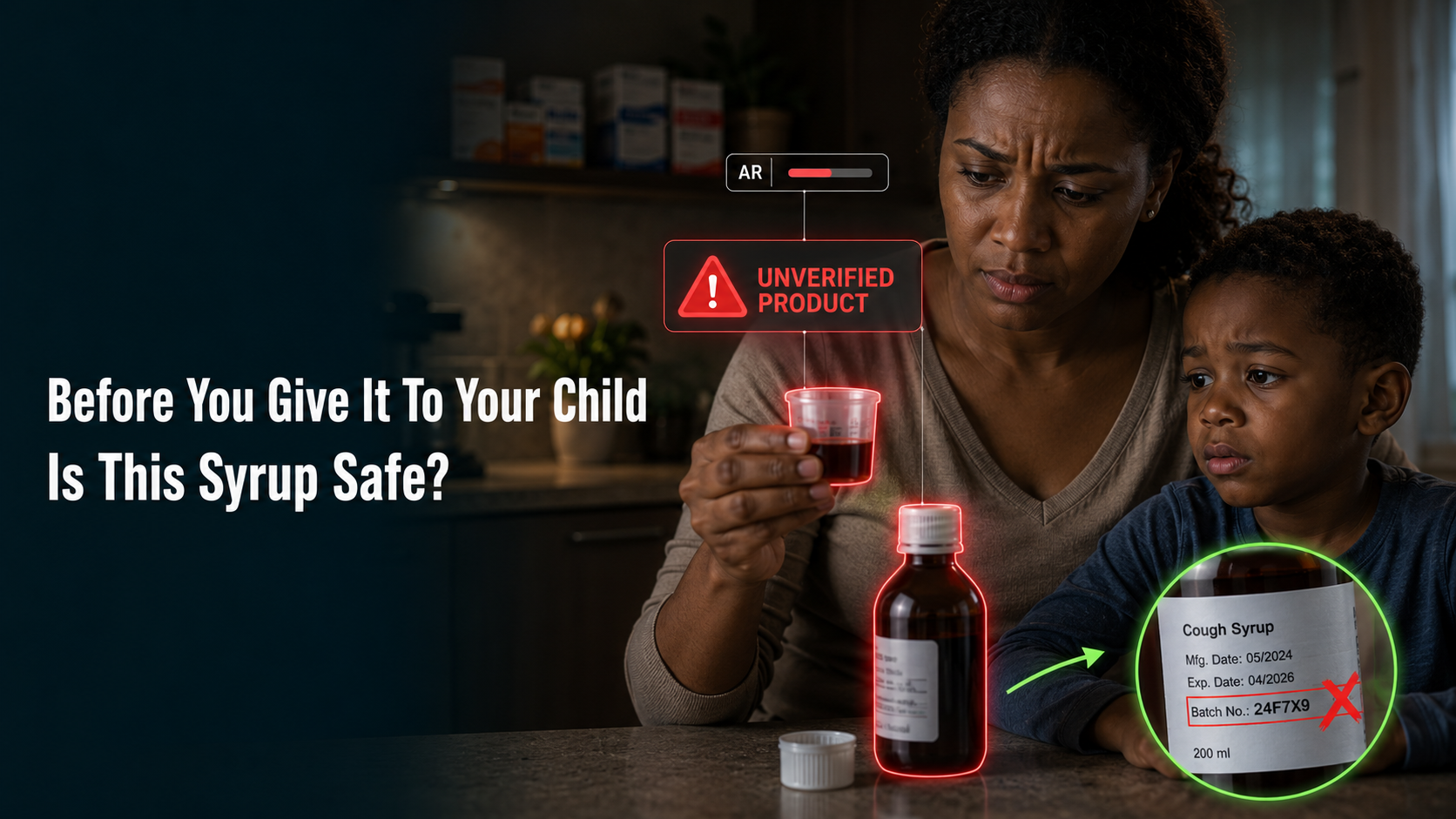
Check whether the specific product and batch number has appeared in any recent NAFDAC or WHO recall notice before giving it to a child.
Be cautious with unusually cheap versions of a normally priced children's syrup, especially from informal sellers.
Prefer purchasing from established pharmacies over open market stalls or unverified online sellers for any liquid medicine given to a child.
Keep the box and batch number until the medicine is finished, since that information is what allows a product to be checked or reported.
Watch for symptoms such as reduced urination, vomiting, or unusual drowsiness after starting a new medicine, and seek medical attention promptly if they appear.
Genuine vs Suspect: A Quick Comparison
Signal | Lower Risk | Higher Risk |
|---|---|---|
Source | Licensed pharmacy | Informal seller or unverified online listing |
Price | Consistent with normal market pricing | Unusually cheap for the same brand |
Batch status | Checked against recent recall notices | Never checked against any alert list |
Packaging | Clean print, intact seal, visible batch number | Damaged seal, unclear or missing batch number |
Symptoms after use | 'None', child responds as expected | Reduced urination, vomiting, unusual drowsiness |
The Myth That Big Brands Cannot Be Affected
There is a common and understandable assumption that a well-known, established pharmaceutical brand is automatically safe and that contamination only happens with obscure or unlicensed products. The documented cases directly contradict this. Some of the products involved in these global alerts were made by long-established manufacturers and sold through normal, legitimate pharmacy channels, not black market stalls.
The real vulnerability is not the size or reputation of the brand. It is a single unverified batch of raw material entering the manufacturing process, at any company, at any time. That is exactly why verification needs to happen at the level of the specific product and batch, not simply by trusting a brand name at sight.
🛡️ Verify Before You Give Any Medicine To A Child
Search the product name, brand, and batch number on verifyproducts.ng before giving any liquid medicine to a child, especially one purchased recently or from a new source.
How To Actually Verify What You Give Your Child
No parent can test a bottle of syrup for diethylene glycol at home. What you can do is reduce the odds of ever using a contaminated batch in the first place.
Check the product name and batch number against current recall notices and verification tools before use, not only after a problem is suspected.
Buy children's liquid medicines from licensed pharmacies rather than informal markets whenever that option is realistically available.
Keep packaging until the bottle is finished, since the batch number is the single most important detail for checking or reporting a product later.
Act quickly if a child shows symptoms like reduced urination, vomiting, or unusual drowsiness after starting a new medicine, since early treatment significantly improves outcomes in diethylene glycol poisoning.
Frequently Asked Questions
1. Is this only a problem in other countries, not Nigeria? No. Nigeria has experienced this exact type of contamination more than once across several decades, including a 2023 recall of an internationally recognised brand.
2. Can I tell contaminated syrup apart from safe syrup by smell or taste? No. Diethylene glycol contamination cannot be reliably identified by smell, taste, or appearance. Verification depends on checking product and batch details, not sensory inspection.
3. Does a recall in another country mean the product is safe in Nigeria? Not necessarily, and the reverse is also true. Contaminated batches have crossed borders before regulators in every affected country issued matching alerts, which is why checking locally relevant recall and verification information matters.
4. What should I do if my child has already taken a recalled product? Seek medical attention promptly, especially if symptoms such as reduced urination, vomiting, or unusual drowsiness are present, and inform the healthcare provider which product and batch was used.
5. Are all cough syrups risky? No. The vast majority of cough syrups on the market are manufactured safely. The risk comes from specific contaminated batches, which is exactly why checking the specific product and batch matters more than avoiding the category altogether.
This article is for general education and does not replace medical advice. If you have concerns about a medicine given to a child, speak with a licensed healthcare provider immediately.