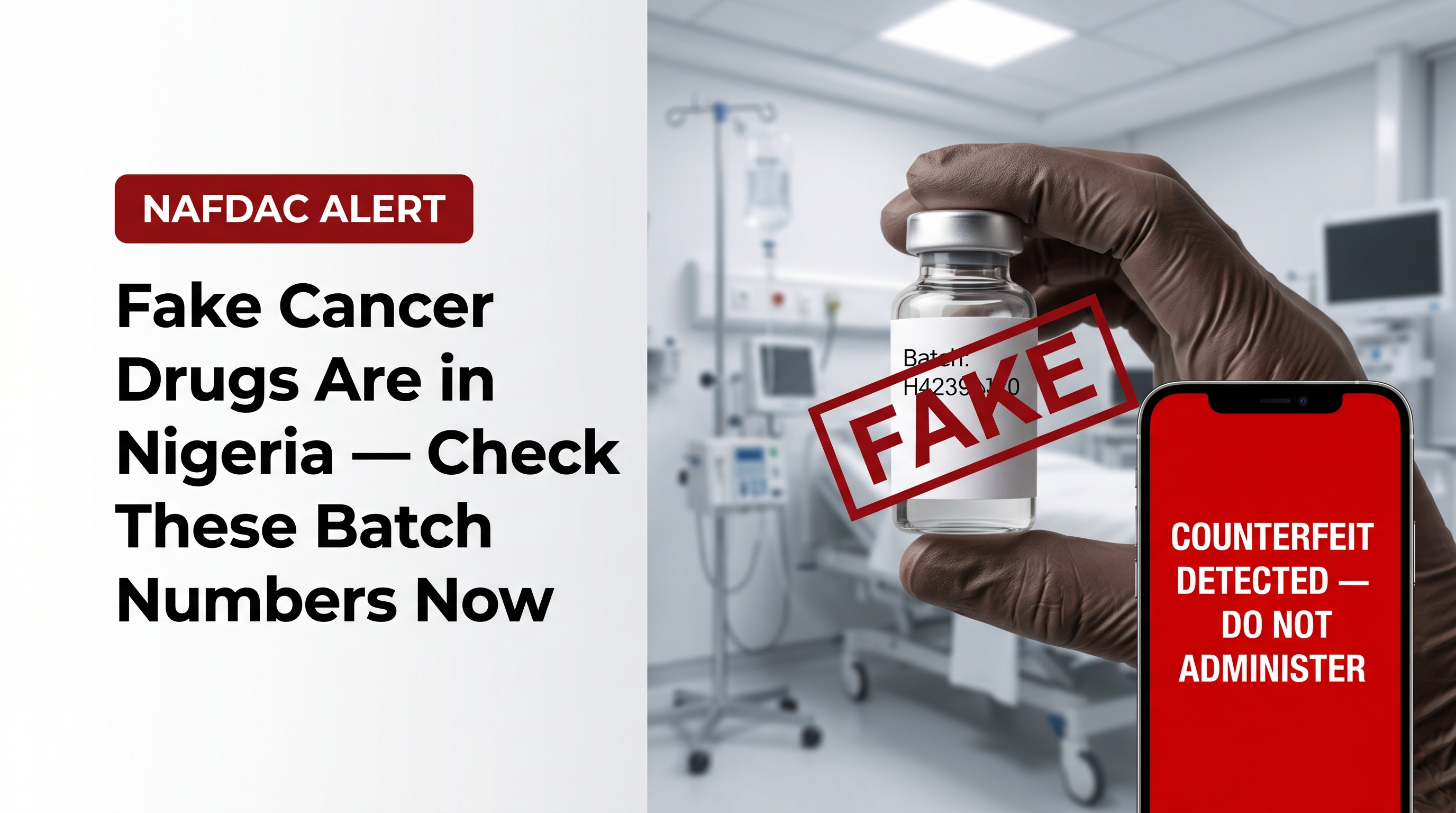
Fake Cancer Drugs in Nigeria: What NAFDAC Found and How to Protect Yourself
The Alert That Every Nigerian Cancer Patient Needs to Read
In March 2026, NAFDAC issued one of its most serious public health alerts in recent years. The agency confirmed that counterfeit versions of Avastin and Tecentriq, two of the most widely used cancer medicines in Nigeria, had been detected circulating in the country's pharmaceutical supply chain.
This was not a minor irregularity. These are drugs that patients depend on to stay alive.
When the counterfeit version enters the bloodstream instead of the genuine product, the cancer continues to grow unchecked while the patient believes they are receiving treatment.
What Are Avastin and Tecentriq
Avastin (Bevacizumab)
Avastin is a targeted therapy manufactured by Roche. It works by cutting off the blood supply that tumours need to grow.
In Nigeria, it is most commonly used in the treatment of recurrent glioblastoma, a form of brain cancer, as well as certain types of colorectal, lung, kidney, and cervical cancers.
Tecentriq (Atezolizumab)
Tecentriq is an immunotherapy drug, also manufactured by Roche, that helps the immune system recognise and attack cancer cells.
It is prescribed for several advanced cancers, including non-small cell lung cancer, extensive-stage small cell lung cancer, liver cancer, and melanoma.
Both drugs are life-critical. Both are expensive. And both have now been confirmed counterfeit in Nigeria.
The Specific Fake Batches NAFDAC Identified
NAFDAC identified the following fake batch numbers currently in circulation:
Fake Avastin Batches
H4239A70, H2290A34, A3508B02, K1830T71, and H0375B01
Fake Tecentriq Batch
B3071A12
If you or a family member is receiving Avastin or Tecentriq treatment in Nigeria, check the batch number on the vial immediately. If it matches any of the numbers above, do not use the product and contact your oncologist immediately.
How the Fakes Were Discovered
The alert followed official communication from Roche Nigeria, the marketing authorisation holder for both products in Nigeria.
Roche received multiple complaints from healthcare professionals across the country who had noticed something wrong with the products patients were presenting at health facilities.
When Roche compared the reported samples to genuine retained samples, the findings were clear.
The counterfeit products showed multiple definitive signs of falsification, including batch numbers that do not exist in Roche's database, poor printing quality, spelling errors on the packaging, incorrect placement of text information, tamper-evident labels inconsistent with genuine products, and serial numbers that do not align with Roche's standard authentication system.
NAFDAC confirmed that physical chemical analysis was not possible in most cases because no physical samples were available, but the documentary and photographic evidence was sufficient to confirm counterfeiting.
How Much Were the Fakes Being Sold For
This is a critical warning sign that every Nigerian patient and carer should memorise. The counterfeit cancer drugs were reportedly sold at prices ranging from 180,000 naira to 350,000 naira. These figures are significantly lower than the cost of genuine versions of these drugs.
When a cancer drug is offered at a price that seems too good, it is almost certainly fake.
Genuine Avastin and Tecentriq are expensive precisely because they are complex biologics that require sophisticated manufacturing.
No legitimate supplier can offer them at dramatically reduced prices.
Why Fake Cancer Drugs Are Especially Dangerous
Treatment Failure
When a patient receives a fake cancer drug, the tumour continues to grow during the treatment period. Weeks or months of what the patient believes is treatment are lost.
In fast-moving cancers, those weeks can be the difference between a manageable disease and one that has spread beyond treatment.
Toxic Contamination
NAFDAC warned that counterfeit cancer medicines may contain incorrect or no active ingredients, harmful contaminants, or wrong dosage strengths.
The contents of an unregulated vial could include substances that cause additional harm to an already vulnerable patient.
False Security
A patient who believes they are receiving genuine treatment may not seek alternative help when symptoms worsen. The false belief that treatment is ongoing delays the decision to act.
What Patients and Caregivers Must Do
1. Verify the Batch Number Before Treatment
Before any dose of Avastin or Tecentriq is administered, check the batch number on the vial against the list above. If the batch number matches any of the confirmed fake batches, do not proceed with administration.
2. Buy Only From Authorised Sources
NAFDAC has directed that Avastin and Tecentriq must be sourced strictly from authorised and verified suppliers. Do not purchase cancer medicines from online vendors, social media sellers, or any source outside a licensed hospital pharmacy or verified oncology supplier.
3. Ask Your Hospital to Verify
If you are receiving treatment at a hospital, ask the oncology team or pharmacy department to verify that the products they are using have been sourced from an authorised Roche distributor in Nigeria.
4. Report Immediately
If you have encountered suspicious Avastin or Tecentriq, contact NAFDAC on 0800-162-3322 or email sf.alert@nafdac.gov.ng. You can also use the Report Fake feature on VerifyProduct.ng.
Herceptin and Mabthera: Two More Cancer Drugs Under Alert
NAFDAC has also issued separate alerts for two other Roche oncology products confirmed as counterfeit in Nigeria in 2026.
Herceptin 600mg (Trastuzumab)
Herceptin is used to treat certain types of breast and stomach cancer. NAFDAC confirmed a counterfeit batch with batch number A8519B34 in Lagos State. The genuine Herceptin 600mg is produced at Roche's facility in Basel, Switzerland.
The fake product carries the same description but uses a batch number that does not exist in the genuine Roche database.
Mabthera 500mg (Rituximab)
Mabthera is used to treat blood cancers, including non-Hodgkin's lymphoma and chronic lymphocytic leukaemia, as well as autoimmune diseases.
NAFDAC confirmed the presence of counterfeit Mabthera bearing batch number N2110A09 in Kaduna and Gombe states.
The Bigger Picture
The unaffordable cost of genuine oncology medicines partly drives the presence of counterfeit cancer drugs in Nigeria.
When a drug costs millions of naira, and a patient cannot afford it, desperation makes them vulnerable to sellers offering cheaper alternatives.
NAFDAC and Roche Nigeria are working together to remove these products from circulation, but the network of counterfeiters is sophisticated and fast-moving.
The best protection for any patient or carer is verification before every treatment cycle.
Share this alert