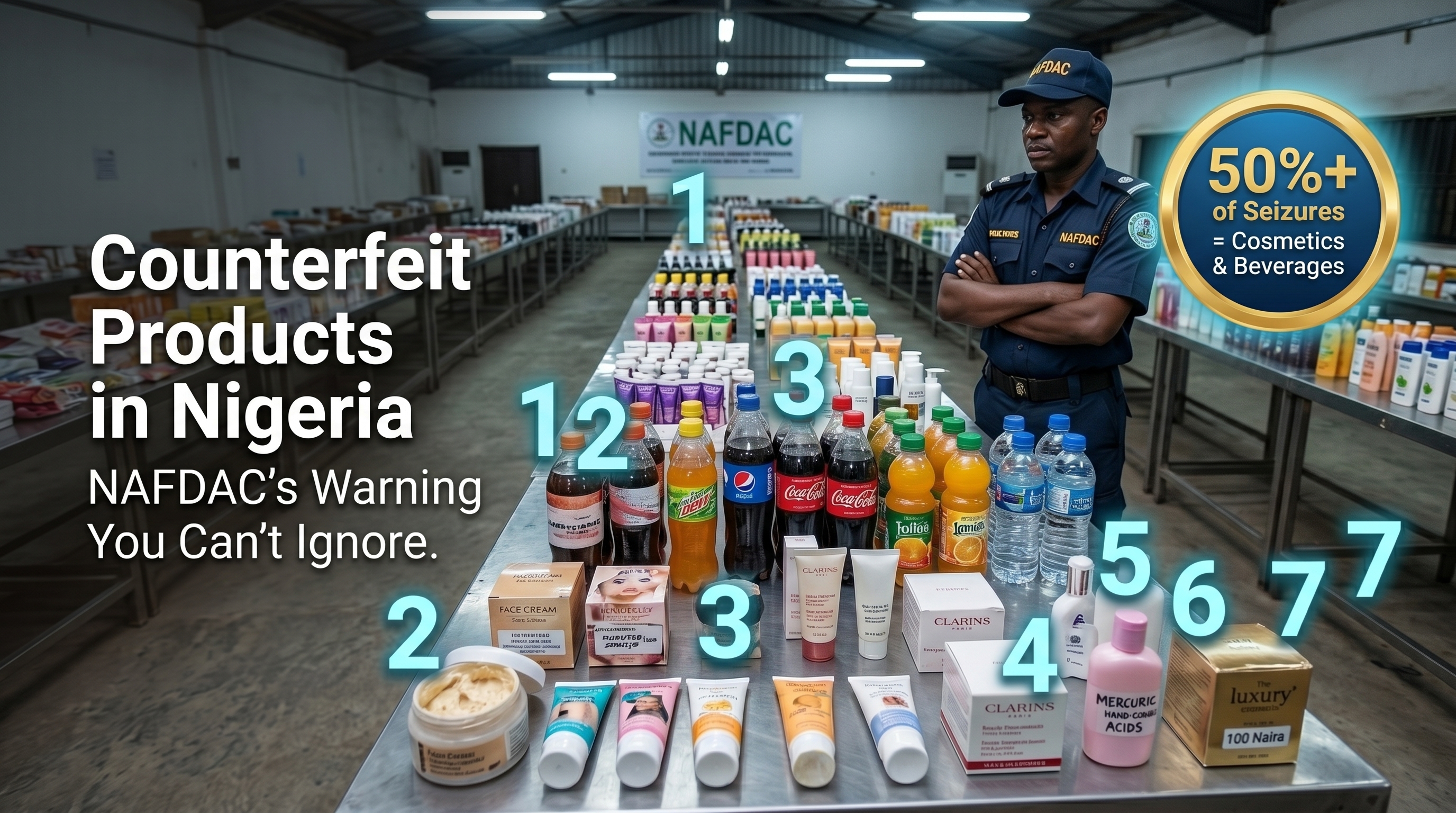
Counterfeit Products in Nigeria: NAFDAC Warns Fake Cosmetics and Beverages Now Exceed 50% of Seizures
Fake cosmetics, food, and beverages now make up over 50% of counterfeit products seized in Nigeria. Learn how to verify your products and avoid toxic daily consumables.
Public safety alerts in Nigeria have historically focused on counterfeit antimalarials and antibiotics. However, official data released by the National Agency for Food and Drug Administration and Control (NAFDAC) reveals a major shift in the illicit market.
During a press briefing to mark International Anti-Counterfeit Month, NAFDAC disclosed that fake cosmetics, food, and beverages now account for over 50% of all counterfeit products seized across the country.
Substandard daily consumables have officially overtaken regular pharmaceuticals in total volume. This growth places millions of everyday shoppers at immediate risk.
How the Fake Product Supply Chain Has Changed
The logistics behind the distribution of counterfeit products in Nigeria have evolved. According to NAFDAC’s Investigation and Enforcement Directorate, criminal syndicates no longer need to travel overseas to establish factories or manage shipments.
Instead, bad actors use online procurement networks to order custom falsified goods directly from overseas manufacturers, primarily located in Asia. To slip past border checkpoints, these networks use a shipping tactic known as cargo consolidation or groupage. Under a groupage arrangement, multiple business owners share a single shipping container. Counterfeiters use this method to mix illegal batches of skin creams, packaged foods, and alcoholic drinks with legitimate goods, making it highly difficult for port inspectors to find them.
High-Risk Consumable Categories and Health Risks
Because manufacturers of counterfeit products clone packaging with extreme accuracy—often printing cloned registration numbers—consumers must be highly alert across these three primary sectors:
1. Counterfeit Cosmetics and Skincare
Skin-lightening creams, luxury lotions, and body washes are the most heavily counterfeited items in the consumer market. To cut down production costs and show fast results, illegal mixers lace these lotions with banned, toxic chemicals like hydroquinone, mercury, and high-dose steroids. Long-term skin exposure to these substances causes permanent skin thinning, severe chemical burns, and systemic organ damage.
2. Adulterated Alcoholic and Packaged Beverages
The production of fake wines, spirits, and soft drinks remains common near major commercial points like the Trade Fair Complex in Lagos, Aba, and Onitsha.
Counterfeiters collect discarded glass bottles from the streets, refill them with unpurified water, industrial dyes, and cheap ethanol, and reseal them. Ingesting these unwholesome mixes can cause instant alcohol poisoning, blindness, and liver damage.
3. Substandard Packaged Foods and Edible Oils
Unregistered, smuggled food products, such as large batches of unverified vegetable oil, frequently enter through land borders. NAFDAC enforcement teams recently seized multi-million naira shipments of uncertified cooking oil. Because these oils skip official testing, they often contain high amounts of rancid free fatty acids and chemical impurities that harm heart health.
SEO Checklist: How to Check for Fake Products in Nigeria
To protect your home from uncertified or toxic goods, apply these three verification steps before making a purchase:
Inspect Packaging Print Quality
Examine the outer labels closely for spelling errors, faded brand logos, or misaligned text. While counterfeiters replicate designs quickly, they rarely match the crisp, high-resolution text quality of genuine brands. If the ink on a luxury item looks smudged or easily scratches off, do not buy it.
Analyse the Retail Price Floor
Every legitimate item carries a fixed cost floor determined by import duties, factory standards, and transport fees. If a store vendor offers a top-tier luxury skincare product or a premium beverage at 40% to 50% below standard retail prices, it is a primary warning sign of a falsified item.
Regulatory Rule of Thumb: If your current budget cannot cover the cost of the original brand, it is far safer to buy an affordable, locally certified alternative than to risk your health on a cheap counterfeit.
Stick to Authorised and Registered Outlets
Buy your daily cosmetics, food items, and baby formulas exclusively from registered supermarkets, corporate retail pharmacies, or authorised brand distributors. Avoid sourcing everyday consumables from roadside hawkers, open public tables, or unverified social media accounts that lack a traceable physical address.
How to Report Counterfeit Goods to NAFDAC
If you buy an item that smells unusual, has inconsistent text, or causes an adverse physical reaction, stop using it immediately. Keep the container and the remaining content as evidence for regulatory analysis.
Toll-Free Complaints Line: 0800-162-3322
Digital Reporting: Submit batch details directly through the official VerifyProduct.ng portal or the upgraded mobile Med Safety application.
CTA: [Verify a Product Now] — Check if your cosmetics, food items, or medicines are officially registered with NAFDAC. Free, instant, and mobile-optimised search.
Share this alert